


Heavy Equipment Repair Welding How to Fix Hardfacing, Buckets, and Booms
Mining and construction fleets subject their machinery to extreme operational stress daily. Heavy equipment repair welding is the essential discipline that restores damaged structural components and keeps high-value machinery operational.
Field repair demands an advanced understanding of metallurgy that goes beyond standard factory production work. The exact heating method that secures a carbon steel excavator boom will compromise an austenitic manganese steel bucket lip. Understanding these material characteristics determines whether a repair holds under load or results in an immediate job site failure.
The Unique Conditions of Field Repair Work
Manufacturing shops construct components using clean stock and known material specifications. In contrast, heavy equipment repair welding requires managing unpredictable field conditions where machinery arrives caked in grease, dirt, and layers of old weld metal.
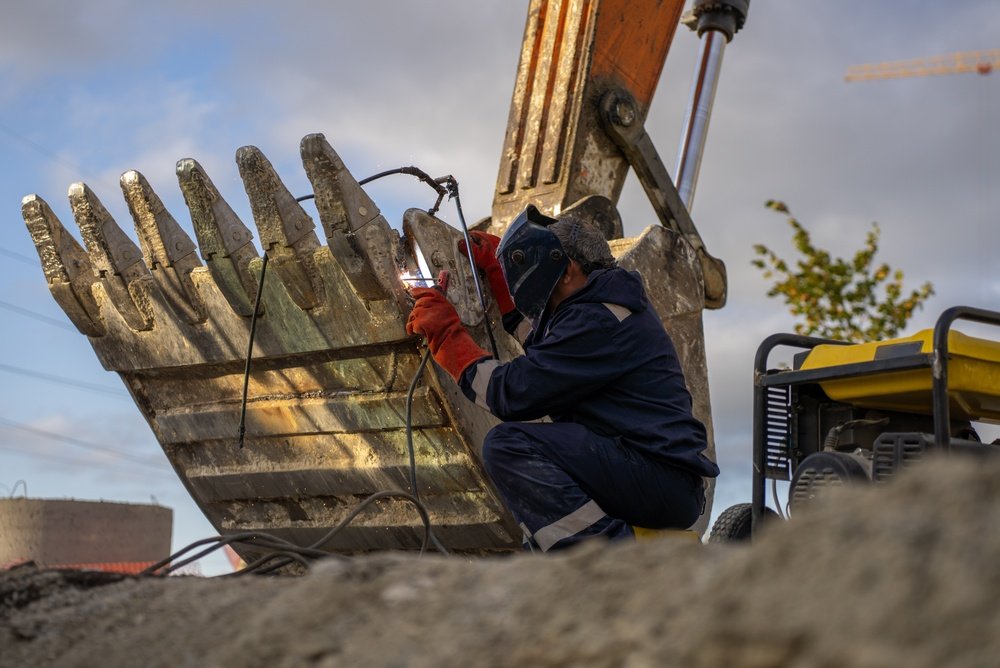
Welders performing fleet maintenance frequently encounter distinct technical challenges:
Unidentified Base Materials. Plates and castings often lack clear specification mill test reports, requiring quick on-site identification.
Residual Internal Stress. Years of severe impact loading create stored mechanical stresses throughout the structural frame.
Out-of-Position Execution. Welding must often occur in overhead or tight vertical clearances where repositioning a multi-ton frame is impossible.
Surface Contamination. Hydraulic fluid, heavy grease, and industrial coatings penetrate deep into joint crevices.
Operational Time Constraints. Maintenance managers need equipment back in service promptly, putting pressure on repair quality.
Core welding fundamentals directly transfer from structural fabrication, but field repair demands careful diagnostic choices before striking an arc.
Distinguishing Carbon Steel from Manganese Steel
Most structural assemblies, including booms, sticks, and main chassis mounts, consist of high-strength carbon or low-alloy steel. These alloys yield predictable results when paired with low-hydrogen consumables and appropriate preheat protocols.
High-wear components present a completely different metallurgic challenge. Bucket lips, cutting edges, and crusher jaws regularly utilize austenitic manganese steel (Hadfield steel), which contains roughly 11% to 14% manganese. This specific alloy work-hardens** under direct impact, making it ideal for severe digging environments.
**The process of making a metal harder or stronger through cold working or deformation.
Manganese steel requires strict heat limitations. Exceeding 500°F for extended periods causes carbide precipitation along the grain boundaries, making the steel brittle and susceptible to catastrophic cracking. While carbon steel benefits from elevated preheat temperatures, applying heat to manganese steel causes permanent material degradation.
Field identification requires a quick evaluation sequence:
Magnetic Response. Austenitic manganese steel is nonmagnetic in its base state, whereas carbon steel strongly attracts magnets.
Spark Testing. Manganese produces dark white sparks that explode into tiny leaf-like bursts at the end of the stream.
Hardness Checks. Base manganese steel remains relatively soft until impact force hardens its surface layer in service.
Heating Control and Joint Preparation
Preheating carbon steel slows the cooling rate, drives off moisture, and allows trapped hydrogen to diffuse safely out of the weld metal. Heavy plate thickness demands higher preheating temperatures, often exceeding 300°F for two-inch structural plates. Welders should verify temperatures using temp sticks or digital infrared thermometers rather than relying on visual estimates.
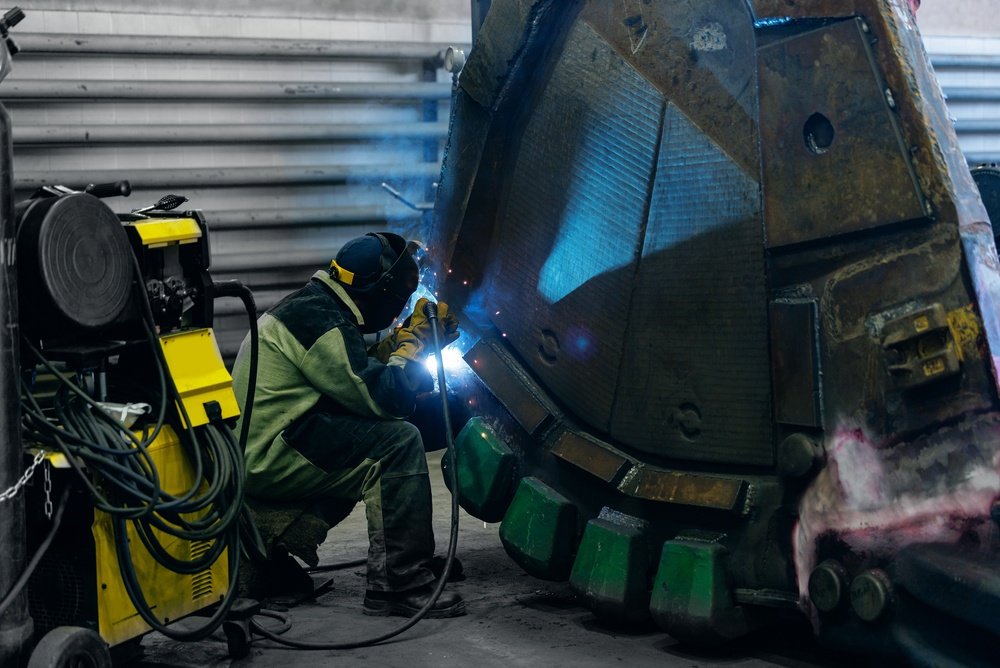
Interpass temperature maintenance is equally critical. Allowing the joint to cool excessively invites cold cracking, while excessive heat buildup destroys toughness within the heat-affected zone.
When performing heavy equipment repair welding on manganese steel, the primary goal shifts to minimizing heat accumulation:
Apply short stringer beads rather than wide weave passes.
Use skip-welding sequences to distribute heat evenly across the structure.
Allow the material to cool between passes to preserve its ductile matrix.
Utilize specialized stainless steel or high-manganese electrodes to prevent cracking.
Joint preparation relies heavily on removing damaged metal entirely. Air carbon arc gouging (CAC-A) serves as the primary method for digging out cracks. Welders should locate crack boundaries using dye penetrant testing, drill stop holes beyond the crack tips, gouge down to sound material, and grind away all carburized slag before laying new metal.
When applying hardfacing overlay, never place hard, brittle alloys directly over cracked base metal. Rebuild the profile using a tough, ductile filler alloy first, lay a buffer layer if necessary, and finish with a maximum of two or three passes of hardfacing material.
Building the Core Skills for Heavy Machinery Repair
Mastering heavy equipment repair welding requires years of practical experience troubleshooting diverse machinery failures in shop and field environments.
A quality training foundation instills essential trade habits: precise arc control across all positions, blueprint reading, thermal management, and strict adherence to welding procedure specifications. Employers in heavy construction, mining, and forestry maintenance seek candidates who demonstrate these core capabilities.
The American Welding Academy’s hands-on training programs provide the foundation for career advancement. Students receive personalized instruction that emphasizes both technical mastery and workplace professionalism. Our programs prepare graduates to create strong, reliable welds while developing the critical thinking and attention to detail that distinguish skilled tradespeople.
Explore our training options to begin your welding career with a solid foundation in proven welding techniques. Contact us online or call (636) 800-9353 to learn more about enrollment.
