


Marine Welding: Specialized Skills for Naval and Commercial Vessels
When people think about skilled trades, they often picture construction sites or manufacturing floors. But marine welding is a distinct and demanding specialty that keeps naval and commercial vessels structurally sound in some of the harshest environments on earth. Understanding what makes this field unique can help you decide if it's a direction worth pursuing in your welding career.
What Makes Marine Welding Different
Marine environments are relentless. Salt water, constant vibration, fluctuating temperatures, and enormous structural loads test every single weld on a vessel.
A weld that performs fine in a controlled shop setting may fail under those conditions. That's what sets marine welding apart from general structural work. The expectations are higher, the environment is less forgiving, and the margin for error is slim.
Marine welders must also work in tight, confined spaces. Ship compartments, hull sections, and bulkheads don't always offer comfortable access. Physical adaptability is just as important as technical skill.
Materials Used in Marine Welding
Knowing your materials is essential in this field. Ship structures require specific grades of steel and alloy that can withstand corrosion and dynamic loading over time.
Common materials include:
Carbon and low-alloy steels (such as AH36, DH36, and EH36) used in hulls, decks, and frames
High-strength structural steels that reduce vessel weight without sacrificing load capacity
Stainless steel in tanks, piping, and corrosion-sensitive areas
Aluminum alloys in superstructures and high-speed vessels, where lightweight construction matters
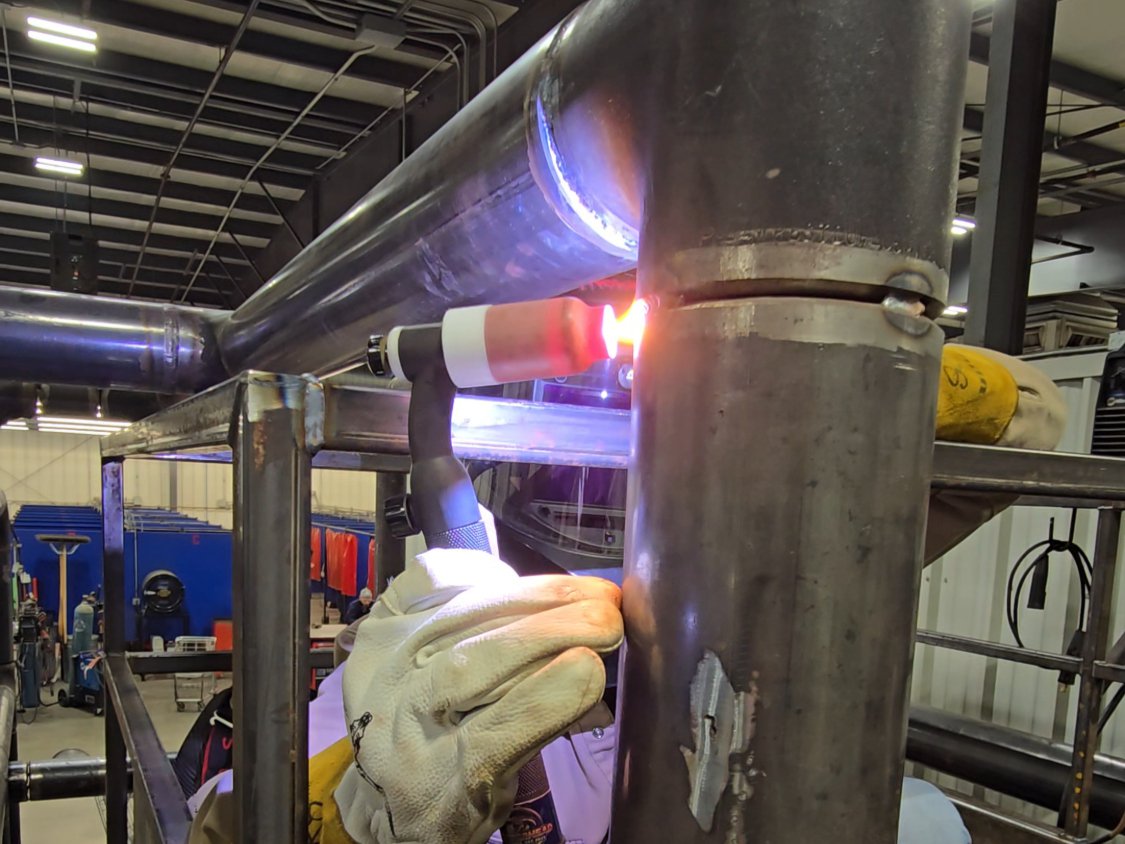
Each material behaves differently under heat. Aluminum, for example, requires a completely different technique than carbon steel. Stainless steel requires strict control of heat input to prevent distortion and corrosion in the weld zone.
Quality Standards and Classification Requirements
Instead of allowing self-certification, classification societies govern marine welding by setting and enforcing the standards that all commercial and naval vessels must meet.
Organizations such as the American Bureau of Shipping (ABS), DNV, and Lloyd's Register require that welding consumables, procedures, and welder qualifications meet strict approval criteria. Every weld must demonstrate adequate tensile strength, yield strength, and impact toughness, especially at low temperatures.
Hydrogen control is another critical standard. Low diffusible hydrogen levels are required to prevent hydrogen-induced cracking, which is a serious structural concern in thick marine plate welds. These aren't requirements you can cut corners on. Welds that don't meet code simply don't pass.
Quality assurance also involves:
Batch traceability and Mill Test Certificates for consumables
Adherence to ISO 9001 quality systems
Consistent performance verification across production runs
Marine Welding Processes in Shipyards
Shipyards use several welding processes depending on the application and joint design. Each one plays a specific role in how a vessel comes together.
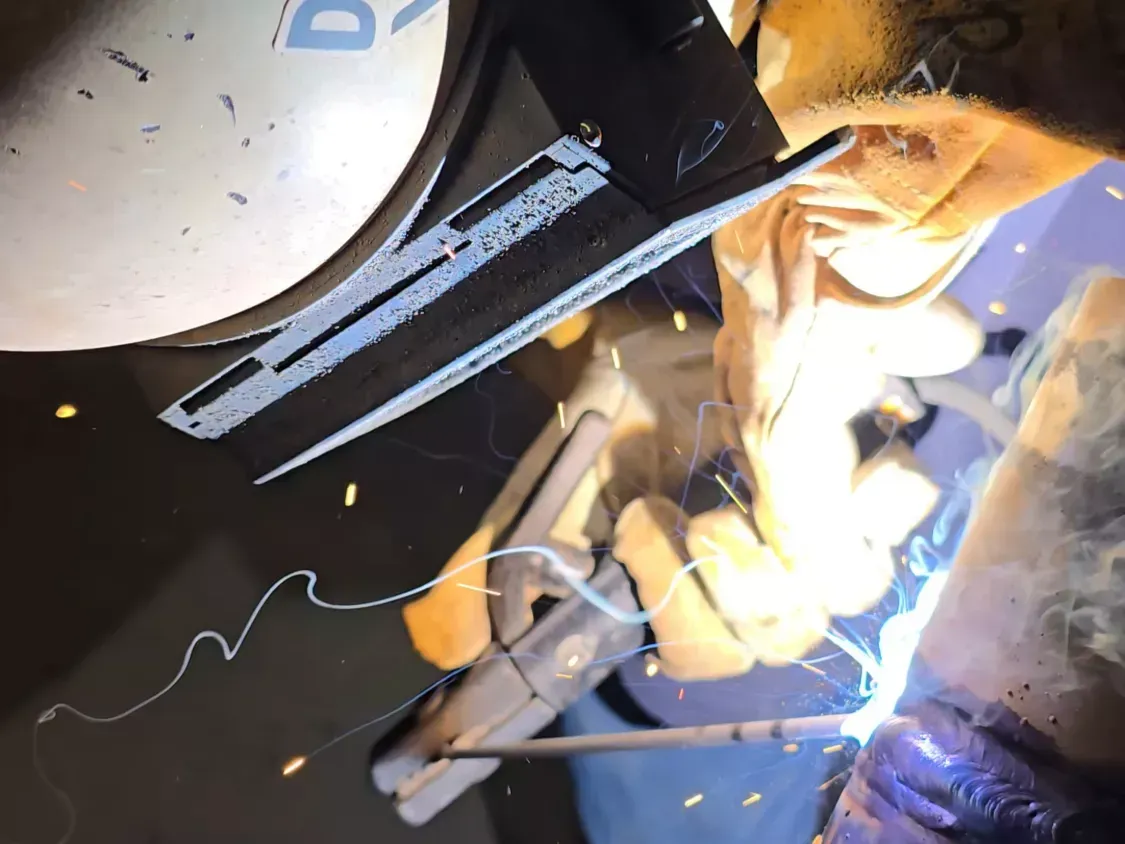
Shielded Metal Arc Welding (SMAW) is commonly used for repairs and outdoor work because of its portability and all-position capability. Flux-Cored Arc Welding (FCAW) is a go-to for panel lines and block assembly because it offers high deposition rates and strong penetration. Submerged Arc Welding (SAW) handles long, straight welds on thick plates in flat positions.
Each process requires proper training and hands-on repetition. Reading a textbook about arc behavior doesn't prepare you for striking an arc on a rolling hull section. Real skill comes from time on the machine.
Building the Foundation at American Welding Academy
Marine welding is a specialization. Before you can pursue it, you need a solid foundation in welding fundamentals, process knowledge, and code awareness. That's exactly what a quality welding school is designed to provide.
At American Welding Academy (AWA), programs are designed to maximize hands-on instructor contact. Students don't just learn technique; they learn how to meet industry standards and carry themselves professionally on the job. AWA's pipe welding, fabrication, and fitting courses are specifically designed to develop the foundational skills required by specialized fields like marine welding.
AWA also welcomes veterans looking to transition into the workforce. The school accepts GI Bill benefits, making it more accessible for those who have served. Trade school training through AWA is a practical, focused path to entering the welding industry with the skills employers actually look for.
To learn more about programs, enrollment, and upcoming start dates, visit the website at www.awaweld.com or call AWA directly at (636) 800-9353.
FAQ
Q: Do I need a special certification to work as a marine welder?
A: Yes. Marine welders typically need to pass qualification tests aligned with classification society standards such as ABS or DNV. These tests assess your ability to produce welds that meet specific mechanical and structural requirements. Your base welding training is the prerequisite before pursuing those certifications.
Q: Is marine welding the same as underwater welding?
A: No. Marine welding generally refers to welding performed during the construction and repair of ships and marine structures above water. Underwater welding is a separate, highly specialized skill that requires additional training beyond standard welding credentials.
Q: What welding positions are commonly required in shipbuilding?
A: Shipbuilding demands welders who can work in all positions, including flat, horizontal, vertical, and overhead. Confined spaces inside hull sections and compartments add another layer of difficulty. Developing comfort in multiple positions is essential before entering this field.
Q: Can career changers or older students learn marine welding skills?
A: Absolutely. Welding is a trade where discipline and attention to detail matter just as much as age. Many career changers successfully transition into welding and go on to specialize in demanding fields. The key is getting proper foundational training first.
