


The Science of Preheat and Post-Weld Heat Treatment (PWHT)
Heat serves as both the essential catalyst and the primary challenge during thermal joining operations. Standard welding procedure specifications frequently mandate post-weld heat treatment to ensure that completed structural or pressure-retaining fabrications meet rigorous code compliance standards.
To manage cooling rates, direct metallurgical transformations, and relieve internal stress concentrations, preheating is applied in tandem with post-weld thermal conditioning cycles. Understanding the physical metallurgy behind these thermal profiles equips tradespeople to produce sound, defect-free welds across complex structural components and industrial piping applications.
Why Preheat Precedes the Initial Root Pass
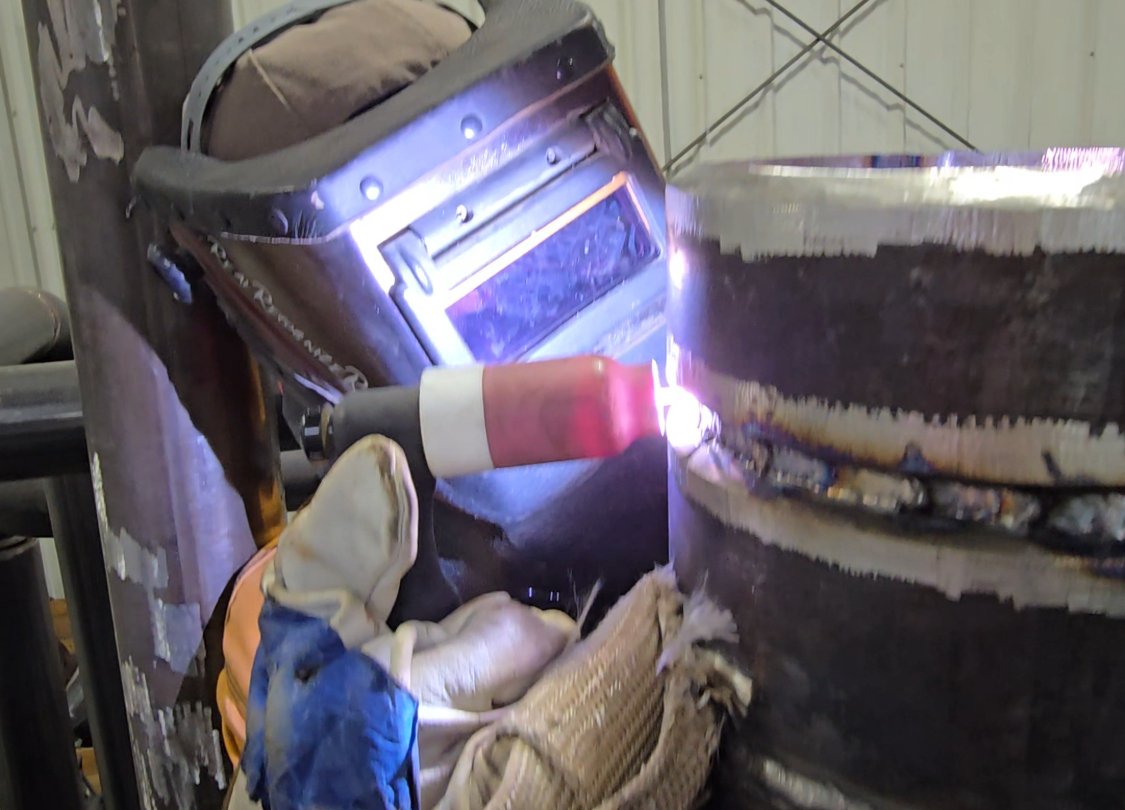
Preheating requires elevating the base metal temperature before striking the electric arc. Its principal mechanical objective is reducing the cooling rate of the weld deposit and adjacent heat-affected zone (HAZ).
Rapid ambient cooling in carbon and low-alloy steels encourages the formation of martensite, an untempered phase known for high hardness and extreme susceptibility to brittle fracture under mechanical load. Extended cooling times allow carbon atoms to diffuse out of solution, yielding softer, tougher phase structures like ferrite and pearlite.
Preheating addresses critical welding environmental factors:
Material Mass and Geometry. Heavy structural sections and thick-wall pipes act as massive heat sinks, rapidly drawing thermal energy away from the weld puddle.
Ambient Conditions. Cold outdoor field conditions accelerate heat transfer rates, demanding elevated baseline temperatures.
Base Metal Chemistry. Carbon equivalent values exceeding 0.30% heighten hardened structure formation, requiring strict preheat control under governing codes such as AWS D1.1 or ASME Section VIII.
Moisture Elimination. Surface preheating vaporizes trapped condensation on joint prep surfaces, eliminating a direct path for hydrogen gas absorption into the molten pool.
Verification remains critical. Qualified craftspeople rely on calibrated contact pyrometers or temperature-indicating crayons rather than visual estimation to confirm baseline temperatures.
Metallurgical Mechanisms of Post-Weld Heat Treatment
When a completed weldment cools, solid contraction creates severe internal stress. The shrinking weld bead experiences tensile restraint from surrounding unheated base metal, establishing locked-in residual stress that can approach the yield strength of the alloy.
Executing a proper post-weld heat treatment holds the assembly at a sub-critical temperature, allowing atomic movement that relaxes internal strain without altering macro-level geometry or melting the structure.
During a controlled heat cycle, several structural refinements occur concurrently within the steel lattice. The specific soak duration depends directly on material thickness, generally calculated at one hour per inch of joint cross-section. Following the soak, precise cooling rates prevent new thermal stresses from developing before the assembly returns to ambient shop conditions.
Hydrogen Control and Sub-Critical Bake-Out Operations
Atomic hydrogen contamination represents one of the most persistent threats to high-strength carbon steel weldments. Hydrogen enters the liquid weld pool through oil, paint, moisture on joint surfaces, or degraded flux coatings on electrodes.
Since hydrogen dissolves readily in hot steel but exhibits low solubility at room temperature, gas atoms become trapped within the solidifying grain boundaries. Under sustained residual stress, trapped hydrogen promotes delayed hydrogen-assisted cracking, which can manifest hours or days after joint completion.
A hydrogen bake-out cycle maintains the completed weld at an intermediate thermal plateau (typically between 400°F and 600°F) immediately following welding. This process allows hydrogen gas to diffuse safely out of the solid metal before full cooling occurs.
Prevention remains the primary defense:
Storing low-hydrogen SMAW electrodes in designated holding ovens at required temperatures.
Utilizing clean, dry shielding gas lines and uncompromised solid wire coils.
Thoroughly degreasing and grinding joint prep faces back to bright metal prior to fit-up.
Resistance vs. Induction Field Execution Methods
Executing a job-site post-weld heat treatment demands specialized equipment capable of maintaining precise temperature profiles. Two distinct electrical heating methodologies dominate field maintenance and shop fabrication work:
Resistance Heating
Flexible ceramic pad heaters contain internal resistance wires that radiate thermal energy directly through the outer pipe wall. Technicians wire these ceramic elements into controlled power supplies, wrapping the joint in high-temperature ceramic insulation blankets. While resistance setups require careful manual configuration and pad placement, they remain widely adaptable for complex fitting geometries.
Induction Heating
Induction systems employ liquid-cooled or air-cooled cables wrapped around the workpiece to generate an alternating magnetic field. This field induces eddy currents within the ferrous pipe material, generating heat internally rather than transferring it externally. Induction systems offer rapid heat-up times, uniform depth heating, and reduced setup times on straight pipe runs.
Both heating methods rely on thermocouples spot-welded directly to the workpiece. Digital data loggers capture continuous time-temperature charts, creating verified quality assurance records required by engineering standards.
For chrome-moly alloys such as P91, holding exact soak windows during post-weld heat treatment is critical. Exceeding specified maximum temperatures degrades creep-rupture properties, while failing to reach minimum thresholds leaves unacceptable residual stresses intact.
First the Fundamentals, Then the Specialization
Navigating heat control, code specifications, and metallurgical requirements demands a solid grasp of fundamental welding principles. Before technicians step into specialized heat-treating roles or advanced field inspectorships, they must master base-level plate and pipe welding techniques, thermal cutting operations, and core joint metallurgy.
The American Welding Academy (AWA) provides hands-on educational programs focused on building strong foundational welding skills. Designed to prepare students for real-world code work, AWA’s curriculum emphasizes procedural discipline, safe shop practices, and practical application.
Whether you are starting a new career path or formalizing your shop fundamentals, structured training helps establish the foundation required across modern industrial trades. Contact us online or call (636) 800-9353 to learn more about enrollment.
