


Reading the Puddle: Essential Weld Pool Tips | American Welding Academy
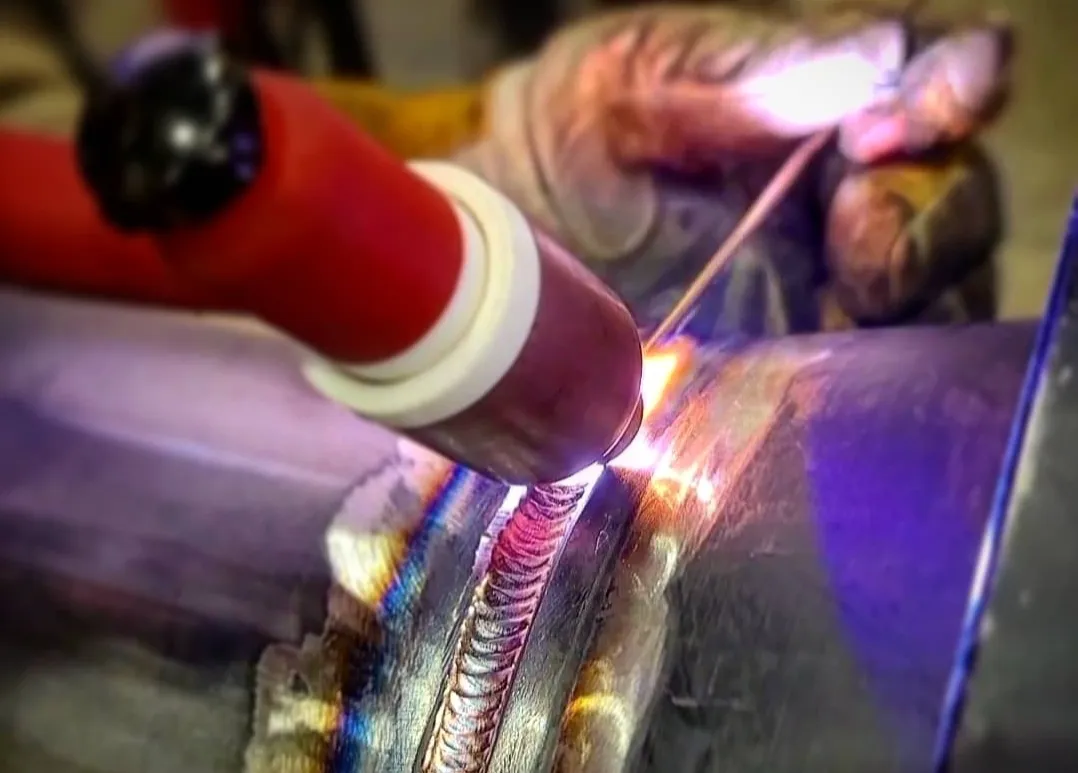
A weld can look okay from a distance and still be hiding problems that show up later in bend tests, X-ray, or service. The good news is that the molten pool is constantly giving you feedback. One of the key welding tips every skilled welder knows is that the weld pool is far more than molten metal—it's a direct line of communication with your work.
The weld pool constantly sends signals through its color, movement, and shape, revealing critical information about temperature, travel speed, and overall joint quality. Whether you're noticing unusual ripples, color changes, or unusual fluidity, these visual cues tell a story. If you can interpret those visual cues in real time, you stop guessing and start adjusting with purpose. This guide explores the language of the puddle, teaching you how to recognize what your weld is telling you in real time.
Get Your Eyes Set Up First (Before You Touch Settings)
Seeing the puddle clearly is not optional, because you cannot correct what you cannot observe. Common guidance on improving your stick welding technique includes positioning yourself so you have a good view of the weld puddle and keeping your head to the side and out of the fumes for the best view.
A few welding tips and setup habits that separate hobby-level work from job-ready practice:
Stable body position and a comfortable rest for your hands reduce wandering at the puddle edge, which is where most defects begin.
Clean, consistent lighting and a lens shade that lets you actually see the edges help you notice wetting and tie-in sooner.
A short practice bead on scrap lets you confirm visibility before you commit to a joint that matters.
If the puddle looks like a bright blur, slow down and fix your viewing angle first. Your technique improves faster when your eyes can track the key features instead of chasing the glare.
Welding Tips: Read the Leading Edge, Not the Center
The center of the weld pool is the loudest and brightest part, which is why beginners stare at it. Pros spend more attention on the front edge, where base metal is breaking down and where fusion is either happening or not happening.
The best mental model is simple: you are watching the base metal melt, then watching the filler metal blend into that melt. Improper technique, incorrect equipment settings, and inadequate preparation can all create defects, highlighting the need to watch for proper wetting action along fusion faces.

What Your Toes and Ripples are Saying
Many common mistakes announce themselves at the toes long before they become finished weld problems. Undercut, for example, creates a groove along the weld toe where base metal melted away but did not get filled back in, which impacts both appearance and integrity.
Here are the puddle cues to watch for and what they often mean:
Toe grooves forming while you move: Travel speed may be too fast to let the pool fill, or the heat may be too high for your motion.
Metal rolling over without blending: Overlap can happen when molten metal flows onto the base material without fusing, which often tracks back to slow travel or poor angle.
Excessive spatter and a harsh-looking arc area: A long arc and too much amperage can contribute to spatter, and AWA notes that keeping a stable arc length helps reduce spatter and improve bead quality.
Inconsistent ripple spacing: Your hand speed is changing, which usually means your body position or bracing is not stable.
Angle Control and Arc Length: Small Changes, Big Consequences
A weld pool reacts fast to angle, arc length, and travel speed, so tiny changes can snowball into visible defects. ESAB’s guidance on stick electrode angle control notes that when the travel angle exceeds about 20 to 25 degrees from vertical, molten metal can be blown out of the puddle, and it also references a 5 to 15 degree drag angle as a recommendation.
When you are troubleshooting in the booth, start with controllables you can repeat:
Joint prep and cleanliness: contaminants are a major driver of porosity and other discontinuities.
Arc length consistency: stable arc length means reduced spatter and better bead quality.
Travel speed discipline: moving too fast can contribute to undercut while moving too slowly can lead to overlap.
Here's a simple way to test your technique: deposit three short beads while changing just one element each time—your angle first, your speed next, then your arc length. Watch your puddle respond and show you which change gave you the best wetting and tie-in.
Step Into the Booth With Purpose
Becoming a skilled welder requires structured fundamentals, honest feedback, and consistent practice. The American Welding Academy recognizes this and builds your welding skills through hands-on practice and welding tips from industry professionals. We hold code standards as non-negotiable because your welds protect lives.
We also keep expectations realistic. AWA develops strong foundational welding skills that position you for specialization and advancement. Our comprehensive program teaches multiple welding processes alongside blueprint reading, shop math, structural and fabrication techniques, and professional job preparation. You learn not just how to weld, but how to build a sustainable career. We emphasize both technical proficiency and professional habits—the combination employers value, and that defines a true craftsperson.
Ready to build your welding foundation with instructors who care about your success? Contact the American Welding Academy at 636-800-9353, visit https://www.awaweld.com, or schedule a tour today. Your career starts with the right preparation.
