


Structural Bolting vs. Structural Welding Why Modern Field Crews Need Both
Field crews who understand structural welding along with structural bolting hold a major operational advantage on modern construction sites. On any commercial build, structural steel relies on two primary joining methods: high-strength bolting and electric arc welding. While ironworking and welding were once treated as separate trades, modern job sites increasingly value cross-functional skills. Crews that master both techniques eliminate downtime, improve structural fit-up, and keep projects moving efficiently.
This article breaks down how structural bolting and structural welding complement each other, where their applications overlap, and how foundational training prepares field crews for the job site.
How Structural Bolting Functions on the Job Site
High-strength bolts join structural steel components using pre-drilled or pre-punched holes created during shop fabrication. Once the steel arrives on site, erection crews hoist the components into position and install the fasteners to secure the frame.
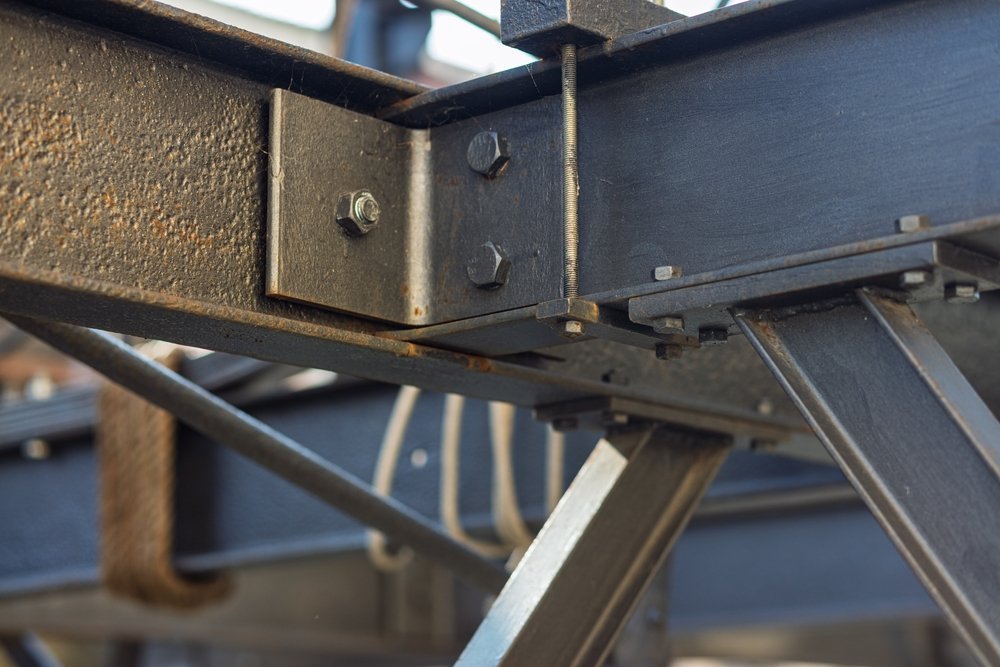
Bolted connections generally fall into two mechanical categories:
Bearing-Type Connections. The bolts act as shear pins, where the shank of the bolt directly bears against the side of the hole to carry the load.
Slip-Critical Connections. High clamping force creates friction between the contacting steel surfaces (faying surfaces). This friction prevents any movement between the plates, carrying the load through clamping pressure rather than direct bolt shear.
Executing a proper bolted connection requires precise field procedures:
Verifying correct bolt grades, diameters, and lot numbers per specification
Preparing faying surfaces to remove loose mill scale, dirt, or unapproved coatings
Applying verified tightening methods, such as turn-of-nut, tension-control (TC) bolts, or direct tension indicators (DTIs)
Installing hardened washers and plates in the specified sequence
Documenting visual and mechanical inspections prior to final sign-off
Bolting offers distinct advantages: it installs quickly, functions well in cold or damp conditions, and relies primarily on mechanical verification. Field crews typically bolt components first to stabilize the framework before executing permanent joint connections.
What Structural Welding Brings to Heavy Construction
While bolts rely on mechanical fasteners, structural welding fuses the base metals and filler metal into a single continuous steel element. This eliminates hardware, gaps, and mechanical play between connecting plates.
Fusion joining allows for complex geometries that bolts cannot easily accommodate. For example, connections in high-rise or seismic structures frequently require complete joint penetration (CJP) groove welds across beam flanges. Stiffener plates, gussets, and column splices also regularly call for welded joints to meet strict design loads.
Field welding demands higher adaptability than controlled shop welding due to environmental and spatial constraints:
Position Diversity. Welders must execute vertical uphill, horizontal, and overhead welds under real-world conditions.
Process Selection Shielded Metal Arc Welding (SMAW) and Flux-Cored Arc Welding (FCAW) dominate field operations due to their portability and tolerance for outdoor environments.
Environmental Controls. Wind, rain, and cold temperatures require preheat protocols, wind shields, and strict moisture control per code.
Inspection standards for welded joints are rigorous. Visual inspection checks for profile, undercut, and porosity, while non-destructive testing (NDT), such as ultrasonic or magnetic particle testing, verifies internal sound metal on critical connections.
Where Bolting and Welding Work Together in the Field
Most structural steel sequences combine both joining methods within the exact same connection detail. During construction, crews bolt a beam's shear tab to secure it temporarily and align the frame plumb. Structural welding crews then follow behind to complete the heavy flange welds. The temporary bolts handle wind loads and self-weight during alignment, while the field welds carry the long-term loads.
Dual capabilities also solve unexpected field discrepancies. Thermal expansion, fabrication tolerances, and dynamic site conditions mean bolt holes do not always line up perfectly in the air. When reaming or slotting holes is structurally impermissible, engineers often approve a field-welded modification. A crew equipped with structural welding credentials can execute an approved design fix immediately, avoiding costly downtime.
Underlying both methods is fundamental trade literacy: reading connection drawings, verifying bevel angles, calculating root openings, and ensuring exact fit-up before securing any joint.
Qualifications and Industry Standards
Qualifications for bolting and welding follow distinct regulatory paths:
Welder Qualifications (AWS D1.1)
Structural steel welding is governed by standards such as American Welding Society (AWS) D1.1. A welder qualification test proves ability for a specific process, position, metal thickness, and joint configuration. Passing a 3G plate test qualifies a welder for vertical plate work, but not pipe or overhead groove connections without additional testing. Continuity records must also be maintained to keep qualifications active.
Bolting Specifications (RCSC)
Bolting credentials follow guidelines set by the Research Council on Structural Connections (RCSC). Rather than a single standardized welder qualification card, bolting proficiency is usually verified through employer-led training, apprenticeship programs, or specialized manufacturer certifications for tension-control tooling.
Having a clear understanding of structural welding alongside bolting mechanics ensures field hands remain versatile and effective throughout every phase of construction.
Laying the Groundwork for Your Next Move
Before entering the welding trade or pursuing specialized certifications, every tradesperson needs dedicated time under the hood. Developing consistent bead manipulation, learning joint fit-up, and mastering torch control require structured practice and clear instruction.
The American Welding Academy (AWA) focuses on establishing core welding skills and foundational trade knowledge. Through low student-to-instructor ratios and hands-on shop experience, students gain practical experience on actual steel joints, code-compliant techniques, workplace safety, and professional expectations that prepare them for field work and future qualification testing.
Whether you are starting a path in structural steel or expanding your core capabilities, a strong foundation is where every career begins.
To learn more about our training programs and upcoming course start dates, check out https://awaweld.com/programs or call (636) 800-9353 to speak with an admissions advisor.
