


Tack Welding Techniques: Why Proper Alignment Matters | American Welding Academy
When most people hear "welding," they picture the final arc, the glowing bead, and the finished joint. But before any of that happens, there is a step that quietly determines whether the whole project succeeds or fails. Tack welding is that step. Small, fast, and easy to overlook, tack welds carry far more responsibility than their size suggests.
What Is Tack Welding?
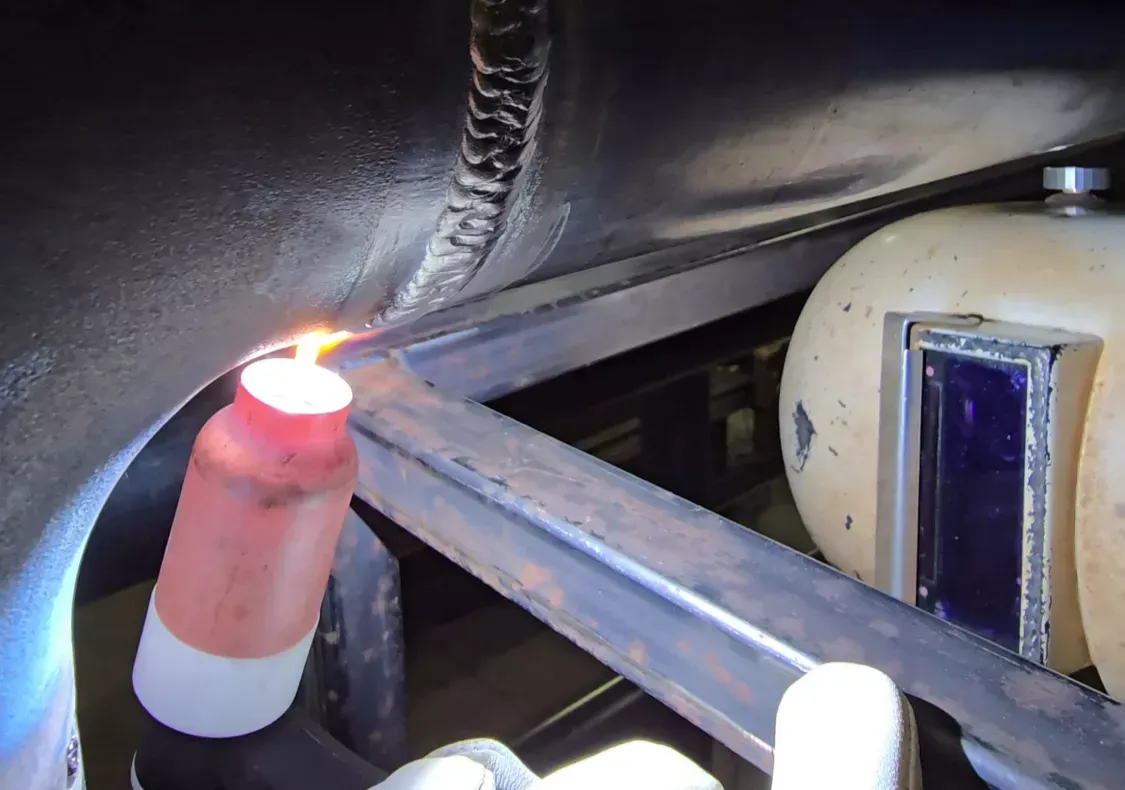
A tack weld is a small, temporary weld used to hold metal pieces in position before the final weld is made. Think of it as a preview of the finished joint. The pieces come together, the tacks hold them in place, and the welder can check fit-up and alignment before committing to a permanent weld.
This step gives you control. If something is off, you can remove the tacks and re-align the parts. Once the final weld goes down, fixing a misalignment becomes far more difficult and far more costly.
However, tack welds are not merely a convenience; they are a critical element of structural integrity. A poorly placed, too small, or otherwise weak tack weld can break under the stresses of the final welding process, causing the components to shift. This ruins alignment and compromises the quality of the finished product.
The Role of Tacks in Maintaining Alignment
Alignment matters in every weld. Even a small shift during the welding process can cause problems down the line. This is where tack welds earn their place.
Here is what properly placed tacks do for alignment:
Hold components in the correct position before heat is applied to the full joint.
Maintain the desired joint gap and prevent work pieces from moving.
Counteract the natural pulling and shrinking of metal as it heats and cools.
Reduce distortion throughout the final welding pass.
Keep assemblies stable if they need to be moved or repositioned before final welding.
Without solid tacks, your pieces shift. When pieces shift, your weld is already compromised before you even strike the main arc.
How Tacks Affect Final Weld Quality
A good tack weld does more than hold position. It creates a foundation that supports the entire final weld. When tacks are placed correctly, the final bead runs uniform and continuous. The risk of defects drops.
When tacks are placed poorly, the opposite happens. Weak or poorly spaced tacks can introduce stress points into the joint. They can cause the metal to pull unevenly. The final weld inherits those problems.
A key aspect of proper tack welding is ensuring consistency in size and strength across all tacks used on a joint. If some tacks are too small or too weak, they may break under the heat and stresses of the final welding process, leading to misalignment or joint movement. Conversely, tacks that are excessively large or strong can make them difficult to fully incorporate into the final weld bead, potentially creating inclusions or hard spots that compromise the integrity of the completed joint.
Ensuring Your Tacks Are Not the Weak Point
Tacks that become weak points in a finished product are often the result of rushing. Here is how to make sure yours hold up:
Space them evenly along the joint to distribute stress and prevent warping.
Match tack size to material thickness so the tack has enough strength without adding excessive heat.
Use the right current for the process; too little heat means poor fusion, and too much can cause cracking or distortion.
Clean the base metal before tacking, since contaminants lead to porosity and weak fusion.
Inspect each tack for cracks, undercut, or lack of fusion before moving to the final pass.
One more thing worth noting: tacks placed at the very end of a joint can become stress concentrations. Planning their location is part of the job, not an afterthought.
Build Your Welding Skills With AWA
Tack welding looks simple but it takes real practice to do consistently well. Getting the spacing right, reading the fit-up, controlling heat input on different materials -- these are things you develop over time with proper instruction and repetition.
At American Welding Academy, students work through hands-on training that covers the fundamentals behind every step of the welding process, including fit-up and tack technique. The goal is not just to teach you how to weld, it is to help you understand why each step matters, so you can make sound decisions in the field.
Ready to build a solid foundation in welding? Visit www.awaweld.comor call AWA at (636) 800-9353 to learn more about our courses and upcoming start dates.
