


Welding Career Longevity: Protecting Your Health & Safety | American Welding Academy
A welding career offers stability, skill mastery, and meaningful work, but it demands a strategic approach to health and safety that extends far beyond the workday. A welder faces cumulative exposure to fumes, intense light, repetitive stress, and industrial hazards that can compromise respiratory function, vision, and joint integrity if left unmanaged. The difference between retiring healthy and managing chronic conditions often comes down to decisions made early and habits maintained consistently throughout your working life.
In this guide, we'll explore strategies for safeguarding three critical areas most affected by welding work: your respiratory system, your eyes, and your joints. Whether you're just starting out or decades into your career, you'll find practical steps you can implement immediately to ensure a long, steady welding career.
Treat Fumes Like a Jobsite Hazard, Not a Nuisance in Your Welding Career
Welding, cutting, and brazing produce metal fumes and gases that pose real health risks—not just minor discomfort. The dangers are significant and cumulative.
The specific threats:
Hexavalent chromium: OSHA identifies this as a highly toxic byproduct of welding. Regular exposure increases your risk of lung cancer and respiratory disease.
Oxygen displacement: In enclosed or confined spaces, shielding gases can displace breathable air, creating an immediate suffocation risk that can escalate quickly.
The most effective approach: Control the source first, then protect yourself
Too many welders learn too late that the smartest move is relying on engineering controls before reaching for respiratory protection. Local exhaust ventilation (LEV) systems are the gold standard—they capture fumes at the source before you breathe them in.
The data supports this: Testing shows that without LEV, total fume concentrations ranged from 2 to 60 mg/m³. With proper ventilation systems in place, those same operations dropped to 3 to 13 mg/m³. That's a significant reduction in what enters your lungs.
The practical takeaway: Position your hood closer to the plume and keep your breathing zone clear of the smoke stream. These small positioning choices—repeated thousands of times across your career—protect your lungs not just today, but for the next 20 or 30 years of work ahead.
Treat Eye Protection as Precision Equipment
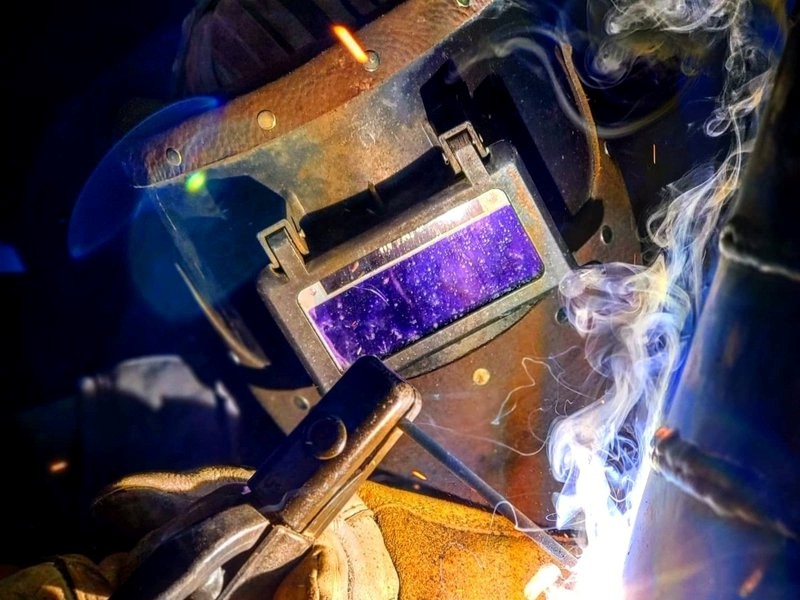
Arc radiation causes immediate, permanent damage to your eyes. This isn't about toughness—it's about preventing burns to your cornea and retina that can end your welding career before you planned.
Getting the Shade Number Right Matters
OSHA requires specific filter lens shade numbers based on your welding process and current range. A higher shade number means a darker filter that blocks more light. Using a shade that's too light leaves you exposed; using one that's too dark makes you work blind and prone to accidents.
Layering Protection
Your welding hood is only part of the solution. When you wear eyewear with filter lenses under your hood, OSHA allows you to reduce the helmet's shade number—but the combined shade values must still meet the safety requirements. This layering approach serves two purposes:
Better visibility: Reduces the overall darkness while maintaining protection
Real-world safety: Shields against grinding debris, spatter, and particles that bounce under the hood
Secondary eyewear isn't optional in actual shop conditions. It's a practical necessity.

Your Eyes Are Telling You When Something’s Wrong
If you're squinting, seeing spots, or repositioning your hood to see better, your setup needs adjustment—not your eyes. These are warning signs that your shade number is wrong or your helmet position is compromised. Fix the equipment, not your technique. Your vision across a 30-year welding career depends on these daily decisions.
Build a Welding Career That Lasts With Joint-Smart Habits
Musculoskeletal pain in welders isn't about fitness—it's about cumulative strain from awkward positions and repetitive motion. Cumulative hours working at or above shoulder height increases the risk of shoulder pain, while crouching or kneeling can contribute to back pain.
Three positioning strategies that work
1. Bring the work to you, not the other way around. Position the part between waist and elbow height on a flat, stable surface. This eliminates the need to fold yourself around the job and keeps your posture neutral. A stable part also means you're not fighting it mid-pass.
2. Avoid staying locked into one stance for long stretches. Extended work at shoulder height compounds risk. Rotate your stance and position throughout long tasks to distribute strain across different muscle groups.
3. Use supports instead of muscling through. A properly positioned stool, seat, or scaffolding at a comfortable height beats kneeling or crouching every time. Try to create a seated work setup where possible as this protects your back and reduces fatigue.
Quick Ergonomic Checklist
Set the part between waist and elbow height and keep it stable.
Rotate positions during long jobs to avoid extended shoulder-level work.
Replace kneeling and crouching with a seat or platform whenever possible.
Take short breaks before discomfort degrades your technique.
Two Bulletproof Habits to Start Today
30-second air check before you strike: Where is the plume going? Can you reposition yourself or the extraction to keep fumes out of your breathing zone?
10-second lens check: Confirm your shade is correct for the process. Wrong shades cause eye strain and accidents.
The long view: Early safety habits feel like they slow you down. Over time, the opposite happens—clearer vision, steadier hands, and fewer aches make you faster and more consistent across your entire welding career.
Invest in Your 30-Year Career From Day One
The choices you make early in your welding career compound over decades. Proper fume control, correct eye protection, and smart ergonomics aren't extras; they're the foundation of a long, healthy, and productive working life. Every small habit protects your lungs, eyes, and joints for the next 20 or 30 years of work.
But knowledge alone isn't enough. You need training that instills these habits from the beginning, instructors who model safety as standard practice, and a program built around real-world industry demands.
The American Welding Academy delivers exactly that. Our comprehensive programs, including Pipe Welding & Fitting (24 weeks) and Fabrication Welding & Fitting (12 weeks), combine hands-on technical training with safety standards aligned to AWS and ASME requirements. Our graduates enter the industry prepared, certified, and positioned for long-term success.
Our world-class instructors emphasize not just technique, but the protective practices that keep you working safely throughout your entire career. Ready to start your welding journey the right way? Connect with us online, or call (636) 800-9353 to learn more about enrollment, program details, and how AWA can help you launch a career that lasts.
