


Transitioning to Welding: Why Retail Professionals Make the Switch | American Welding Academy
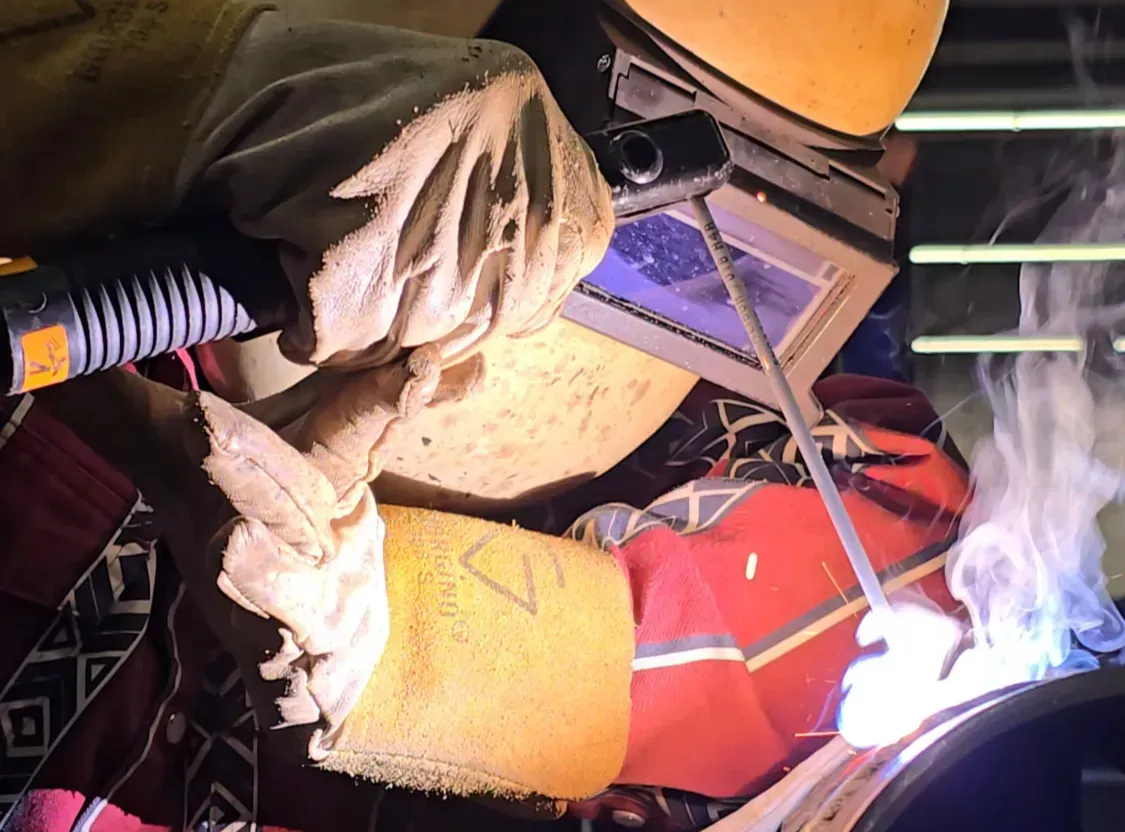
While retail teaches you invaluable skills like patience, problem-solving, and working under pressure, it rarely offers the tangible satisfaction of building something that lasts, or the financial freedom that comes with a specialized trade. A welding career bridges that gap, offering an adrenaline-fueled professional pivot where your income is determined by your skill, not a corporate wage ceiling. From structural fabrication to heavy-duty industrial rigs, the world of welding is vast and seeking dedicated talent. If you're ready to swap the retail floor for the open sparks of the workshop, here is why stepping up to the rig is the ultimate power move for your future.
You Already Have What It Takes for a Welding Career
Working retail isn't easy. It demands stamina, patience, and focus. Those same qualities are foundational in the welding trade.
Here's what service workers bring to the table:
Attention to detail: Retail workers learn to spot discrepancies fast, whether it's inventory counts or customer orders. Welders need that same sharp eye to evaluate materials, maintain clean work areas, and identify flaws before they become costly mistakes.
Physical endurance: Long shifts on your feet translate directly to the physical demands of welding work. Welding often means standing, crouching, or holding awkward positions for extended periods.
People and communication skills: Retail sharpens your ability to communicate under pressure. On a job site, clear communication with your team and supervisors is essential for safety and efficiency.
Reliability and punctuality: Employers across every trade put reliability at the top of their list. If you showed up consistently in retail, that habit carries real weight in the trades.
You're not starting from zero. You're simply redirecting skills that are already part of your professional toolkit. The ability to focus on detail, manage time effectively under pressure, and provide a high level of quality control, all traits honed in a fast-paced retail environment, are immediately transferable assets in the world of welding. This pivot is less about abandoning your past and more about optimizing your existing strengths for a rewarding future.
A strong foundation of existing professional discipline drives the transition to a welding career. Rather than viewing the change as a complete reset, consider it an upgrade where your current soft skills become the bedrock for mastering a valuable technical trade.
A Faster Path Than You Expect
One of the most common misconceptions about switching careers is that it requires going back to school for years. That's simply not the case with welding.
Welding programs can take as little as 12 to 24 weeks to complete. Compare that to a four-year college degree, and the timeline is dramatically shorter. You can train, earn your certification, and enter the workforce in less time than it takes to finish two semesters of a traditional university program.
That shorter path also means lower costs. Trade school tuition is typically a fraction of a four-year degree, and you'll start building hands-on experience right away. The training prepares you practically, keeps you focused, and gets you working.
What to Expect When You Start Training for Your Welding Career
Welding isn't a shortcut. It requires dedication, practice, and meeting real industry standards. Here's what a solid training program will cover:
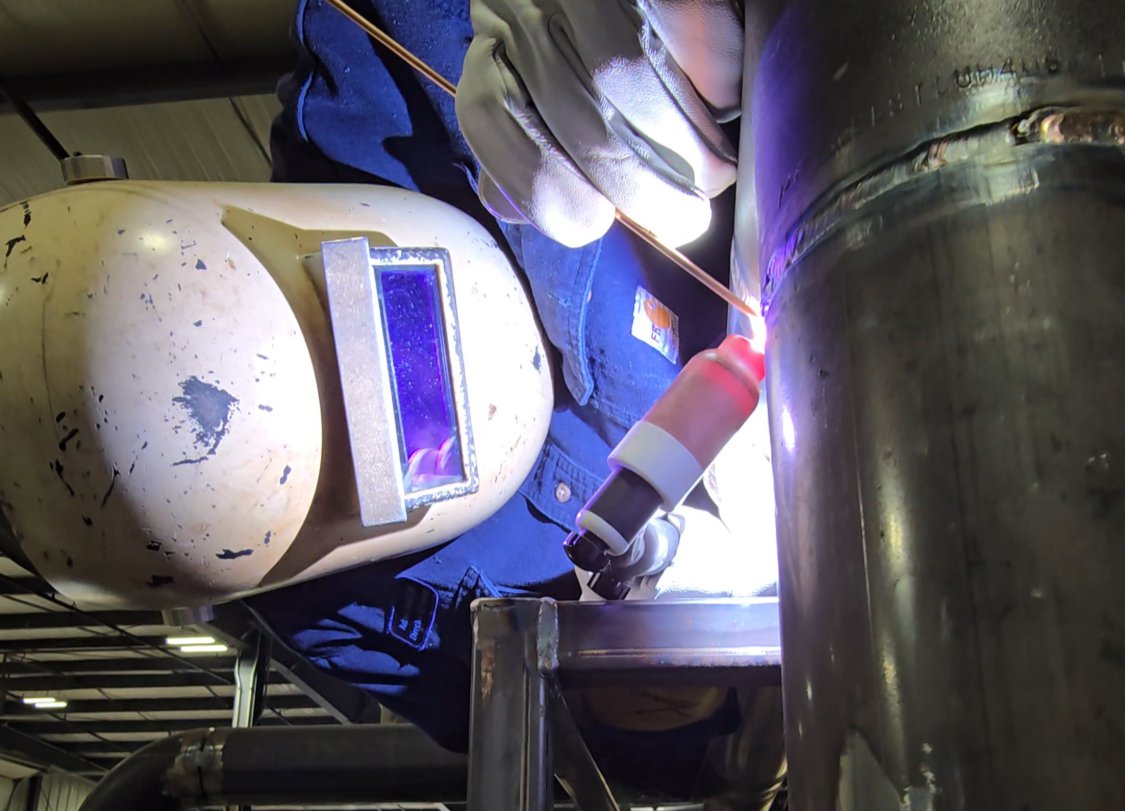
Core welding processes. MIG, TIG, stick, and flux-cored welding are all fundamental techniques that form your foundation.
Blueprint reading. Understanding how to interpret technical drawings is a skill used on virtually every job site.
Safety practices. Proper use of protective equipment, safe handling of materials, and awareness of your environment are non-negotiable.
Code standards. Passing certification tests isn't handed to you. Every student must earn their credentials by meeting established industry codes.
Work habits and professionalism. Good programs don't just teach technique. They prepare you to show up, communicate, and conduct yourself as a reliable professional.
These foundational skills aren't just academic; they are the bedrock of career longevity in welding. Mastery of these areas allows a welder to move from basic repairs to high-stakes, specialized work like pipeline construction, aerospace, or structural steel, where precision and adherence to strict regulations are paramount for safety and project success.
Why Employers Value Trade School Graduates
It's worth understanding what the job market actually looks for in a new welder. Employers want people who are technically sound and show up with the right attitude. Welding certifications from an accredited program signal that you've been trained to a recognized standard. That matters when you're applying for your first position.
From manufacturing and construction to pipelines and fabrication shops, certified welders are needed across a wide range of industries. The variety of environments means you have real options when it comes to choosing a path that fits your lifestyle and goals.
How the American Welding Academy Can Help You Make the Switch
At the American Welding Academy (AWA), the focus is on more than just teaching you to weld. Our programs prepare you as a complete professional. Courses in pipe welding and fitting, and fabrication welding and fitting give students practical skills grounded in real industry expectations. Instructors stay closely involved throughout training, and life skills, including financial literacy and workplace conduct, are part of the curriculum.
Every graduate earns their credentials by meeting code standards. That commitment to quality is exactly why employers come back to hire AWA graduates time and again.
If you're ready to stop second-guessing your next move, reach out to the AWA team. Visit our website at www.awaweld.com or call (636) 800-9353 to learn more about upcoming programs and enrollment.
