


Custom Trailer Fabrication How Welders Build Agricultural Equipment
From hauling tons of freshly harvested crops to moving oversized tractors across rugged fields, off-the-shelf trailers often fall short of the unique demands of modern farming. Building an agricultural trailer isn't just about fusing metal. These welding jobs require precise structural engineering, material selection, and rigorous stress testing to survive unforgiving field conditions. This article explores how expert welders turn raw steel into high-capacity, custom-built farm equipment designed to handle agricultural workloads.
Welding Jobs in Agricultural Fabrication
Welding jobs in agricultural fabrication require a unique combination of structural expertise, adaptability, and heavy-duty technique. Unlike factory production lines where standard parts are assembled under controlled settings, ag fabrication demands custom solutions tailored to unpredictable farm operations. Skilled welders must interpret load requirements, choose the right joint designs, and execute strong welds on materials ranging from heavy structural steel tubing to specialized alloy sheets.
Since these trailers endure relentless vibration, extreme dynamic weight shifts, and harsh outdoor environments, every weld must deliver absolute structural integrity to prevent catastrophic failure in the field.
The everyday scope of these welding jobs spans multiple specialized processes depending on the equipment component. Beyond technical execution, the demand for qualified welders in the agricultural sector continues to grow alongside the complexity of modern farm machinery. Fabricators in this niche must possess a strong understanding of metallurgy, blueprints, and agricultural safety standards to build equipment that complies with highway transport regulations while surviving rugged off-road conditions.
For tradespeople entering the field, agricultural trailer fabrication offers a rewarding career path where specialized skill directly impacts the efficiency, safety, and productivity of farming operations nationwide.
Core Skills Needed for Custom Trailer Welding Projects
Building high-capacity agricultural trailers requires far more than just basic hands-on torch control. To execute successful custom fabrication projects, welders must possess a well-rounded set of foundational technical skills that ensure every build is safe, precise, and structurally sound:
Blueprint Reading and Layout Skills. Custom builds rarely rely on standard assembly instructions. Welders must accurately interpret complex engineering schematics, bill-of-materials lists, and multi-view blueprints to translate raw measurements into precise metal frameworks.
Knowledge of Metallurgy and Material Selection. Farm trailers endure diverse stresses and environmental exposures. Fabricators need a strong grasp of how different metals—such as carbon steel, high-strength low-alloy (HSLA) steel, and aluminum—react to heat, stress, and corrosive agricultural chemicals.
Precision Measuring and Fit-Up. Clean joint preparation and accurate fit-up are essential for maintaining structural integrity. Welders must master precision measuring tools, squaring methods, and beveling techniques to minimize gap variations before striking an arc.
Understanding Structural Loads and Dynamics. Fabricators must anticipate how dynamic weight, tongue weight, and road vibration affect frame stress points. Designing and reinforcing high-stress zones—such as crossmembers, axle mounts, and hitch points—requires a solid understanding of physical force distribution.
Materials and Techniques Used in Trailer Fabrication
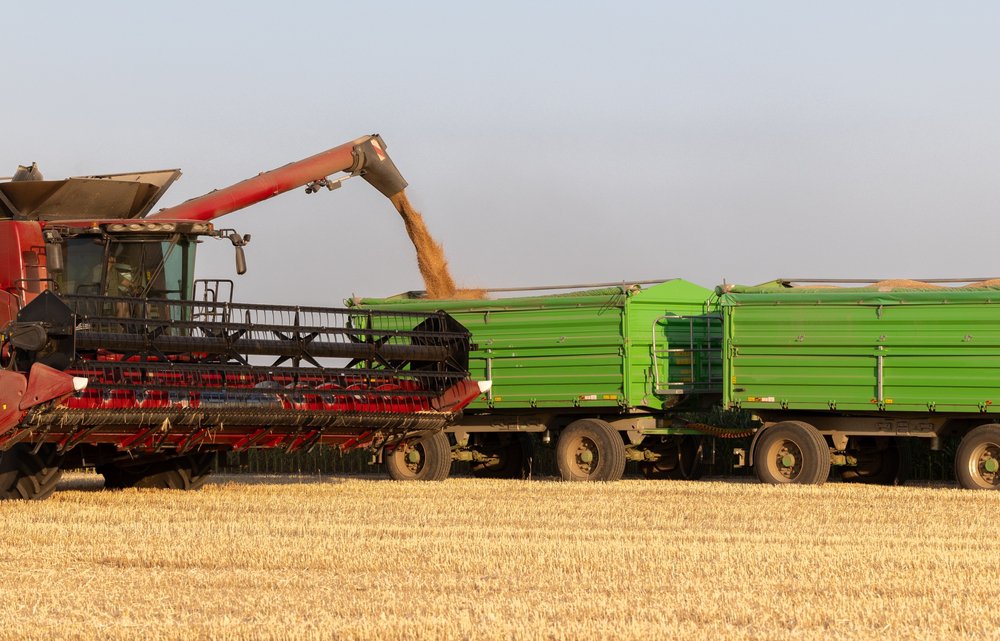
Most agricultural trailers are built from heavy-gauge steel. This material needs to withstand constant loading, rough terrain, and changing weather.Welders frequently utilize Metal Inert Gas (MIG) welding for high-speed, high-deposition joints on thick trailer frames, while Tungsten Inert Gas (TIG) welding is preferred for precision components or aluminum grain bodies requiring clean, corrosion-resistant finishes.
Flux-Cored Arc Welding (FCAW) is also widely used for heavy-gauge steel due to its deep penetration capabilities and resistance to windy shop or field conditions. Mastering these varied techniques allows fabricators to construct everything from high-capacity livestock haulers to custom tilt-deck implement trailers.
Common Components Found in Agricultural Trailers
Agricultural trailers include several parts that require careful, precise welding. Common components include:
Main Frame & Chassis | The primary load-bearing skeleton, typically fabricated from I-beams, structural channel, or thick square steel tubing. | Requires continuous, deep-penetration welds along main rail splices to resist torsional twisting over uneven terrain. |
Drawbar & Tongue Assembly | The forward structural connection linking the trailer to the tractor or tow vehicle (A-frame, straight, or gooseneck configurations). | Highly reinforced gusseting at connection points to handle high tongue weight and sudden pulling shocks. |
Axle Assemblies & Hangers | Heavy-duty torsion or leaf-spring suspension assemblies mounted directly to the subframe. | Axle seats and hanger brackets require precise square alignment and multi-pass welds to prevent uneven tire wear or tracking failure. |
Crossmembers | Lateral steel beams spaced along the chassis to support the deck or floor bed. | Full-perimeter joint welds to evenly distribute concentrated point loads from heavy machinery or bulk cargo. |
Side Walls & Enclosures | Steel, aluminum, or mesh side structures for containment (e.g., grain sides, stake pockets, or livestock walls). | Stitch welding sheet or paneling to structural uprights to maintain flexing durability without adding excess dead weight. |
Tailgates & Ramps | Rear loading doors, hydraulic tilt ramps, or grain chute gates. | Heavy-duty hinge barrel welding and reinforced latch points to endure constant mechanical cycles and heavy impact loads. |
Take the Next Step Toward a Welding Career
At The American Welding Academy (AWA), our programs are designed to maximize hands-on practice with instructor feedback. Students don't just learn technique; they learn how to meet industry standards and carry themselves professionally on the job. AWA's pipe welding, fabrication, and fitting courses are specifically designed to develop the foundational skills required by specialized fields.
AWA also welcomes veterans looking to transition into the workforce. We accept GI Bill benefits**, making it more accessible for those who have served. Trade school training through AWA is a practical, focused path to entering the welding industry with the skills employers actually look for.
To learn more about programs, enrollment, and upcoming start dates, visit the website at www.awaweld.com or call AWA directly at (636) 800-9353.
**GI Bill® is a registered trademark of the U.S. Department of Veterans Affairs(VA). More information about education benefits offered by VA is available at the official U.S. government website at http://www.benefits.va.gov/gibill
Frequently Asked Questions
Do I need prior experience to start a welding career?
No. Most training programs teach the basics from the ground up.
Can welding skills transfer between different industries?
Yes. Core welding techniques apply across construction, manufacturing, and fabrication work alike.
Is welding physically demanding work?
It can be, especially trailer fabrication work. Welders often stand for long periods and lift heavy materials regularly.
