


Welding Safety Psychology: Focus & Mental Discipline | American Welding Academy
Welding demands more than just technical skill and a steady hand; it requires intense mental clarity. True welding safety and craftsmanship start in the mind long before the arc strikes, going far beyond simply wearing the right gear or following standard procedures.
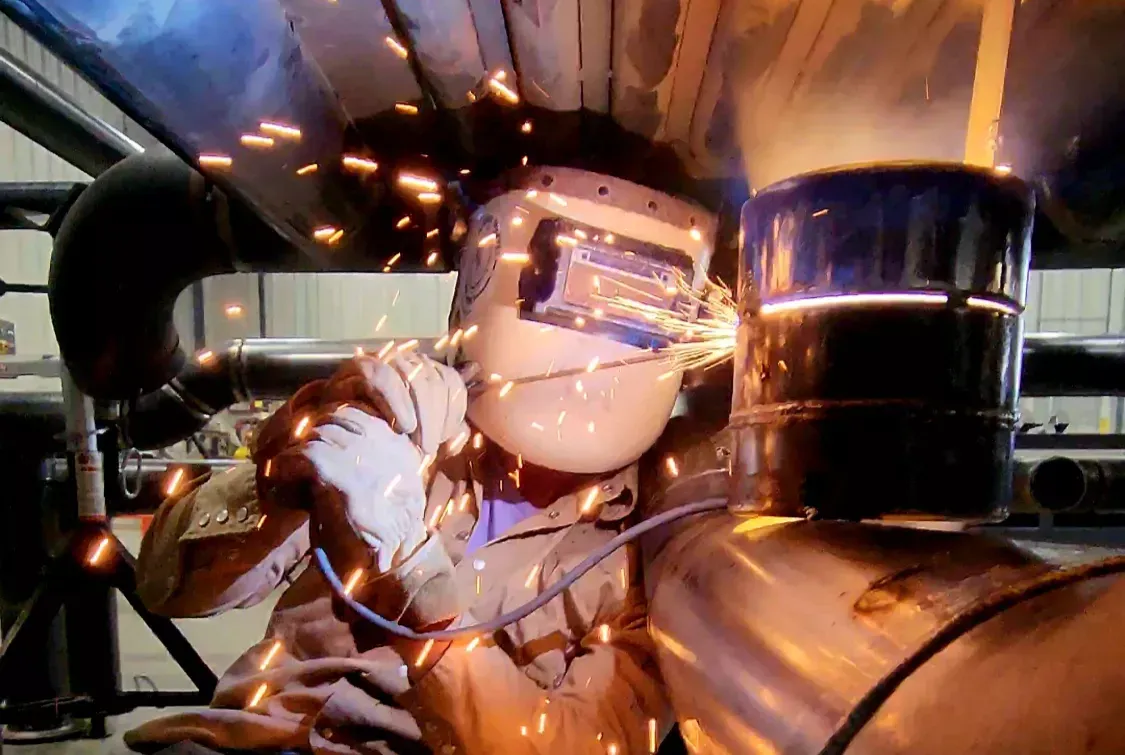
When you drop your welding hood, you enter a psychological zone of absolute concentration. The outside world fades, shrinking your focus entirely to the molten pool, the filler rod, and the arc.
Cultivating this mental transition is vital. Locking into this laser focus prevents critical mistakes that, in welding, can easily compromise both the integrity of the weld and your personal safety.
The Hood as a Mental Boundary for Focus
The moment you drop your hood, your world narrows. Outside noise fades. Your job becomes the weld pool and nothing else. That mental shift is intentional, and it's powerful. It's what welders call "zoning in," and it's one of the most important skills you can build.
Zoning in means giving your full attention to the task at hand. In welding jobs, that's not optional. A split second of distraction can mean a flawed weld, a safety incident, or a failed inspection. The hood isn't just physical protection. It's a mental boundary between you and everything that doesn't matter right now.
Techniques for Locking In During Critical Welds
Staying focused during a critical weld takes practice. The good news is that focus is a skill, and it can be developed.
Here are a few proven techniques welders use to stay sharp:
Pre-task mental preparation. Before you even pick up a torch, take a moment to review the joint, the position, and your plan. Knowing exactly what you're about to do reduces hesitation once the arc starts
Controlled breathing. A slow, deliberate breath before striking the arc helps calm your nervous system and centers your attention
Visualization. Picture the weld before you run it. Imagine your travel speed, your angle, and how the puddle will behave. Athletes use this technique, and it translates directly to the booth.
Mental anchors. A short, repeatable phrase or physical cue can help bring your mind back when it starts to drift. Something as simple as "arc, angle, speed" can re-engage your focus mid-pass.
Eliminate unnecessary variables: Organize your workspace, position your body comfortably, and confirm your settings before starting. Distractions often come from avoidable sources.
These habits don't develop overnight. They're built through consistent repetition and a commitment to approaching every weld with intention.

How Mental Fatigue Creates Physical Danger
There is a direct line between a tired mind and a dangerous mistake. When mental fatigue sets in, reaction times slow, attention narrows in the wrong direction, and small errors start to multiply.
A welder who is mentally exhausted is more likely to:
Skip a pre-weld equipment check
Lose track of heat input or travel speed
Miss early signs of a defective weld
Move through safety steps mechanically rather than thoughtfully
React too slowly to an unexpected hazard
Studies have shown that physical exhaustion and mental fatigue often go hand in hand in welding environments. Heat, noise, and repetitive work all drain cognitive resources. The result is a welder who is physically present but mentally checked out. That's when accidents happen.
The fix is not to push through. It's to rest, hydrate, and reset before continuing. Regular breaks aren't a sign of weakness. They're part of working safely and producing quality work.
The Mindset That Keeps You Safe
Welding safety is a culture, not just a checklist. Skilled welders who consistently produce strong, code-compliant work are the same ones who take their mental state seriously. They recognize when they're not ready to weld. They ask for a few minutes to regroup. They know that one compromised pass can undo hours of solid work.
Developing that level of self-awareness takes guidance, not just technical instruction. It takes an environment where safety, humility, and professionalism are treated as non-negotiable values.
Building Professionalism: The AWA Welding Safety Standard
At the American Welding Academy (AWA), training goes beyond technique. Students learn how to approach their work with intention, discipline, and a genuine respect for the demands of the trade. AWA's instructors don't just teach you how to weld, they prepare you to show up every day as a focused, safe, and reliable professional.
Every student must meet code standards to earn their credentials. That standard reflects the real world of welding, where the quality of your focus shows up in every weld you run.
If you're ready to build a strong foundation in welding, reach out to the American Welding Academy. Visit our website at www.awaweld.com or call us at (636) 800-9353 to learn more about our welding programs and tuition options.
