


Stainless Steel vs. Carbon Steel Welding Techniques: Key Differences | American Welding Academy
Welding stainless steel demands a fundamentally different approach than working with carbon steel, despite their surface similarities. While both materials join through arc welding, the mechanical and chemical properties of stainless steel introduce unique challenges that can compromise weld quality if ignored.
Stainless is far less forgiving about heat, oxidation, and contamination. Understanding these fundamental differences—from electrode selection to post-weld treatment—is essential for producing strong, corrosion-resistant joints. Whether you're a seasoned welder transitioning to stainless or learning for the first time, adapting your technique ensures durable, professional results every time.
Why the Rules Change When Welding Stainless Steel
Austenitic stainless steel has two classic weld-related problem areas. These are sensitization in the heat-affected zone and hot cracking in the weld metal. Sensitization is tied to spending too long in a harmful temperature range. This is why stainless procedures often push for lower heat input and tighter control of temperature between passes.
Interpass temperature control is a big deal in multi-pass work, and a common general requirement for austenitic stainless is keeping the maximum interpass temperature around 302°F to reduce hot-crack risk.
Carbon steel, on the other hand, often benefits from preheat and minimum interpass requirements aimed at reducing hydrogen cracking risk. That difference alone explains why a technique that works on a carbon plate can create avoidable trouble when you move to stainless pipe.
Welding Stainless Steel Mistakes
Many first-time-on-stainless issues stem from treating it like mild steel, especially in terms of cleanliness, shielding, and heat control. Common mistakes include:
Using the same wire brush, flap disc, grinder, or workbench you use on carbon steel. Cross-contamination can embed iron particles and invite rust staining where you expected corrosion resistance.
Skipping dedicated prep habits and a clean area. Airborne dust and dirty tooling can contaminate the joint edges and the puddle.
Letting the part get too hot, or lingering while washing the bead. Overheating increases the chance of sensitization or carbide precipitation and can undermine corrosion performance.
Ignoring back-side shielding on open-root stainless, then being surprised by heavy oxidation (sugaring) on the root.
Treating purge gas like an optional nice-to-have.” The routine purpose of an inert purge (commonly argon) is to prevent oxidation of the weld and heat-affected zone.
Assuming porosity stems solely from equipment settings, but this overlooks critical factors. Contamination and shielding problems are frequent drivers of trapped gas pockets, especially if surfaces are not cleaned well or shielding coverage is disrupted.
A root pass that looks acceptable on the face can still be a problem on stainless steel if the inside is heavily oxidized, because that root oxidation is exactly what purging is meant to prevent.
Carbon Steel Habits to Reset
Some carbon steel habits are useful, but a few need a deliberate reset when stainless steel is on the bench.
Heat management is the biggest mindset change. Carbon steel guidance often emphasizes minimum preheat or minimum interpass to fight hydrogen cracking. Stainless steel commonly needs an upper ceiling between passes to reduce hot cracking and other heat-related issues. Applying the slower, heat-soaking technique used for thicker carbon steel to stainless steel work is counterproductive. Extended time at elevated temperatures accelerates sensitization, a metallurgical process that depletes chromium from grain boundaries and triggers corrosion failures.
Shielding discipline is the next big one. Inert gas purging protects stainless steel root passes from oxygen infiltration, which manifests as anything from light oxidation to severe surface sugaring. This contrasts sharply with carbon steel work, where root discoloration rarely indicates failure. Stainless steel forces a procedural shift: purge systems, dams, and leak checks must be engineered into fit-up rather than addressed reactively.
Make contamination control your priority. The quick surface prep that suffices for carbon steel isn't adequate for welding stainless steel. Residual particles that remain can trigger porosity defects. Since contaminants and shielding failures are leading porosity culprits, rigorous cleaning isn't a luxury; it's a requirement.
Practical Switch Checklist
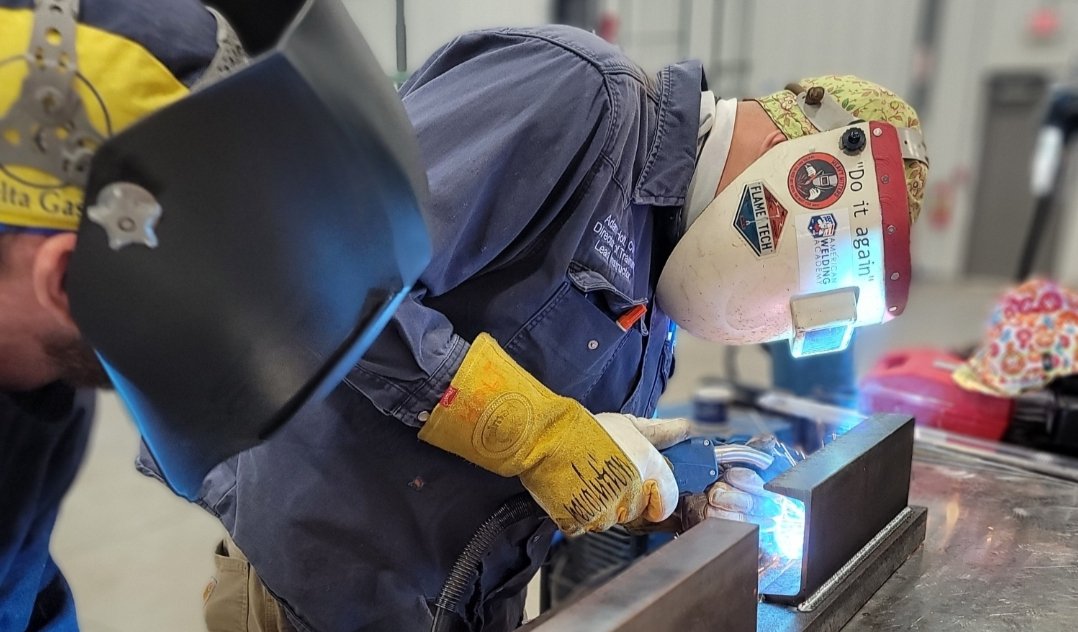
Use this as a quick pre-weld routine when you are moving from carbon steel over to stainless steel in the same shop.
Separate tooling. Use separate, dedicated brushes and tools for stainless steel. Keep the prep area clean to reduce cross-contamination.
Control temperature. Avoid overheating during prep and welding. Pay attention to interpass limits; austenitic stainless steel is often limited to 302°F.
Protect the root. For open-root GTAW on stainless steel , set up inert back purging to prevent oxidation and sugaring.
Clean like it matters. Remove oils and residue since contaminants and poor shielding coverage can drive porosity.
Inspect both sides. Face appearance is not the full story on stainless steel. Back-side oxidation can be the hidden failure point in corrosive service.
Training That Matches Reality
Mastering the transition from carbon steel to stainless steel separates competent welders from industry professionals. The techniques you've learned here—temperature control, dedicated tooling, meticulous cleaning, and proper purging—form the foundation of quality stainless work. But knowledge alone won't make you fluent in these methods. You need hands-on practice, real-time feedback, and structured guidance from experienced instructors who understand the nuances of welding stainless steel in live production environments.
This is where the American Welding Academy (AWA) steps in. AWA offers comprehensive welding programs designed to move you beyond theory into applied expertise. Our instructors walk you through each technique with real equipment, actual materials, and industry-standard procedures. Whether you're transitioning from carbon steel work or building your foundational skills from scratch, AWA helps you develop the confidence you need for consistent, defect-free joints.
Don't let knowledge gaps cost you. Invest in your craft. For program questions, call (636) 800-9353, reach out online, or visit our website: https://awaweld.com/.
