



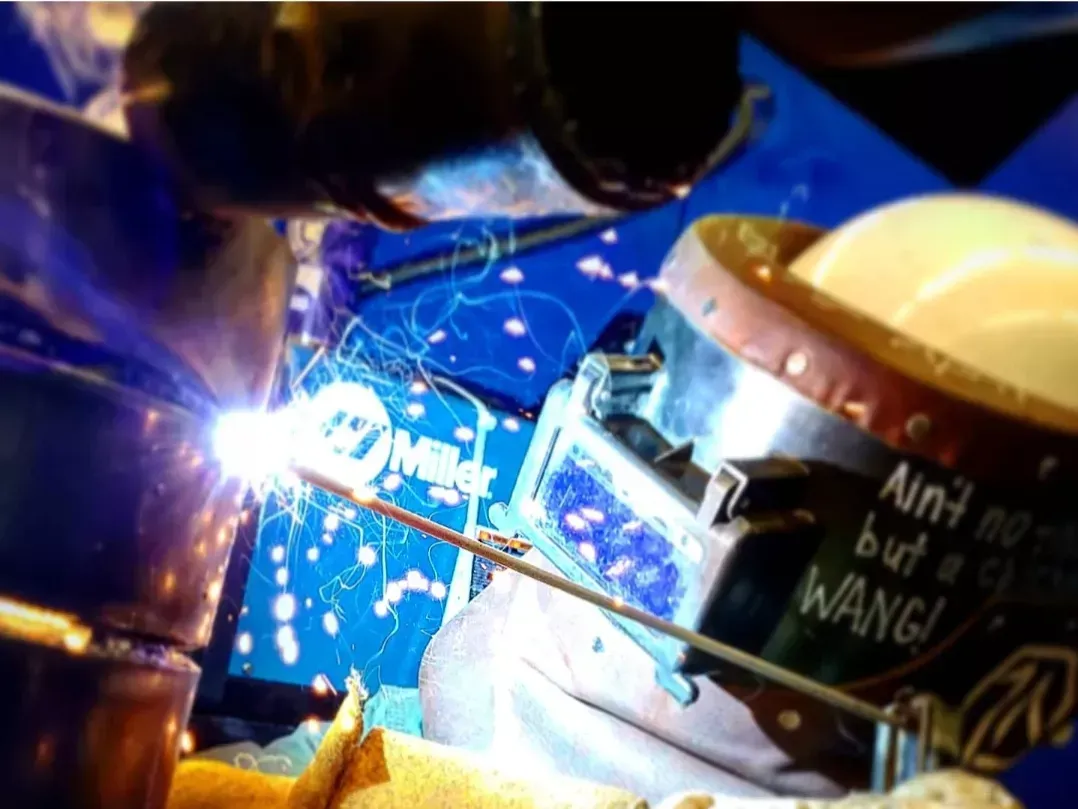
Preparing for Welding Trade School: First-Day Tips & Skills | American Welding Academy
Walking into your first day of welding trade school can feel exciting and intimidating at the same time, especially if you have never worked in a shop setting before. The good news is you can build a real head start without a machine, simply by sharpening the habits that schools expect from day one. This guide will teach you what to rehearse so your time in welding trade school is focused on improving technique, not scrambling to catch up.
Establish Safety Habits First
Before anything else comes safety. Cutting and welding work expose you to metal fumes and ultraviolet radiation. Hazards like burns, eye damage, and electrical shock are also constant concerns. Safety is not a later topic. It is the starting line.
Before class begins, train yourself to perform a quick, consistent scan every time you enter a work area. Know what is hot, what can spark, what is energized, and what can trip you.
Eye protection demonstrates how small details matter significantly. Higher shade numbers on filter lenses mean darker filters that allow less light radiation through. Both the person doing the work and anyone observing should use appropriate eye and face protection that complies with ANSI Z87.1 standards.
Side protection is equally important, as it reduces the risk from hazards like slag chips and grinding fragments. Even when wearing a welding hood, safety glasses with side shields or goggles may be required.
Bulletproof your safety routine before welding trade school training:
Put on personal protective equipment in the same order every time.
Never skip quick checks such as inspecting for cracked lenses, frayed glove stitching, and loose boot laces.
Keep your work area tidy, coil cords properly, and never leave tools where you or someone else can step on them.
Practice clear communication by confidently saying phrases like “hot”, “behind you”, and “coming through” until they become automatic.
Develop Hand Skills Without a Welder
You can strengthen coordination, steadiness, and body control without striking an arc. The goal is not to fake welding at home. Rather, it is to make your hands and eyes cooperate so that instructions in the booth stick faster.
Try these simple drills that mimic the physical demands of actual welding:
Trace and Track: Draw two parallel lines on paper and travel between them slowly with a pen, keeping the tip centered. Only increase your speed after you can stay consistent.
Distance Control: Hold a marker at a fixed gap from the page using a spacer like stacked coins. Maintain that gap steady while you move.
Position Practice: Sit, stand, and kneel in stable stances while rehearsing smooth forearm movements. Awkward posture often causes shaky bead placement later, so this practice is critical.
If you have safe access to a garage or workspace, practice measuring, clamping, and keeping parts aligned. Being able to hold material securely and work comfortably is a major part of producing clean results once you begin actual joining
Master Measuring, Fit-Up, and Shop Math
Many new students underestimate how much time early training in welding trade school spends on layout, accuracy, and preparation. The cleaner your fit-up and the more consistent your dimensions, the easier it becomes to focus on puddle control and travel speed later.
Focus on these practical basics:
Read a tape measure quickly, including common fractions, and always double-check before you cut.
Mark straight, repeatable lines with a combination square or speed square.
Practice the measure twice discipline by learning to write measurements clearly so you can recreate them.
A helpful habit is to keep a small notebook for numbers, quick sketches, and reminders. In a shop environment, memory is not a plan. Learning to document what you did is part of becoming a reliable craftsperson.
Build the Right Work Ethic
There are work ethic skills that instructors notice immediately when students arrive at welding trade school. These include showing up prepared, taking feedback well, and putting in focused repetitions. These traits do not replace technical ability, but they speed up learning because you spend less time recovering from preventable mistakes.
Build a simple weekly routine that supports your training:
Maintain consistent sleep and hydration schedules.
Practice gentle wrist and shoulder mobility through stretching to help you hold steady positions longer.
Take notes on any tutorial you watch, writing short and clear steps, then follow your own notes to verify they are truly usable.
Equally important is practicing coachable behavior. When someone corrects your angle, pace, or setup, respond with curiosity instead of defensiveness. The fastest skill improvement usually comes from repeating a corrected motion until it becomes your new normal.
Get Professional Training With The American Welding Academy
Preparing yourself mentally and physically before your first day makes all the difference in your welding trade school experience. By establishing strong safety habits, developing hand skills, mastering measurement fundamentals, and cultivating the right mindset, you will step into the classroom ready to focus on what matters most: improving your welding technique.
Ready to start your welding career? Visit American Welding Academy at https://awaweld.com/ to explore program details, discuss start dates, and find the right fit for your goals. You can also reach out at to speak with an admissions advisor about education options and touring the facility.
