


Welding Work Ergonomics & Back Pain Prevention | American Welding Academy
If your back aches after a shift, it is rarely because you are out of shape. In most cases, welding work asks your body to hold awkward angles, grip tightly, and stay still for long stretches, which loads your lower back, neck, and shoulders in ways they were not designed to handle. The good news is that small changes in how you set up the job, position your body, and pace your day can reduce strain without slowing you down.
What Is Really Making Your Back Hurt?
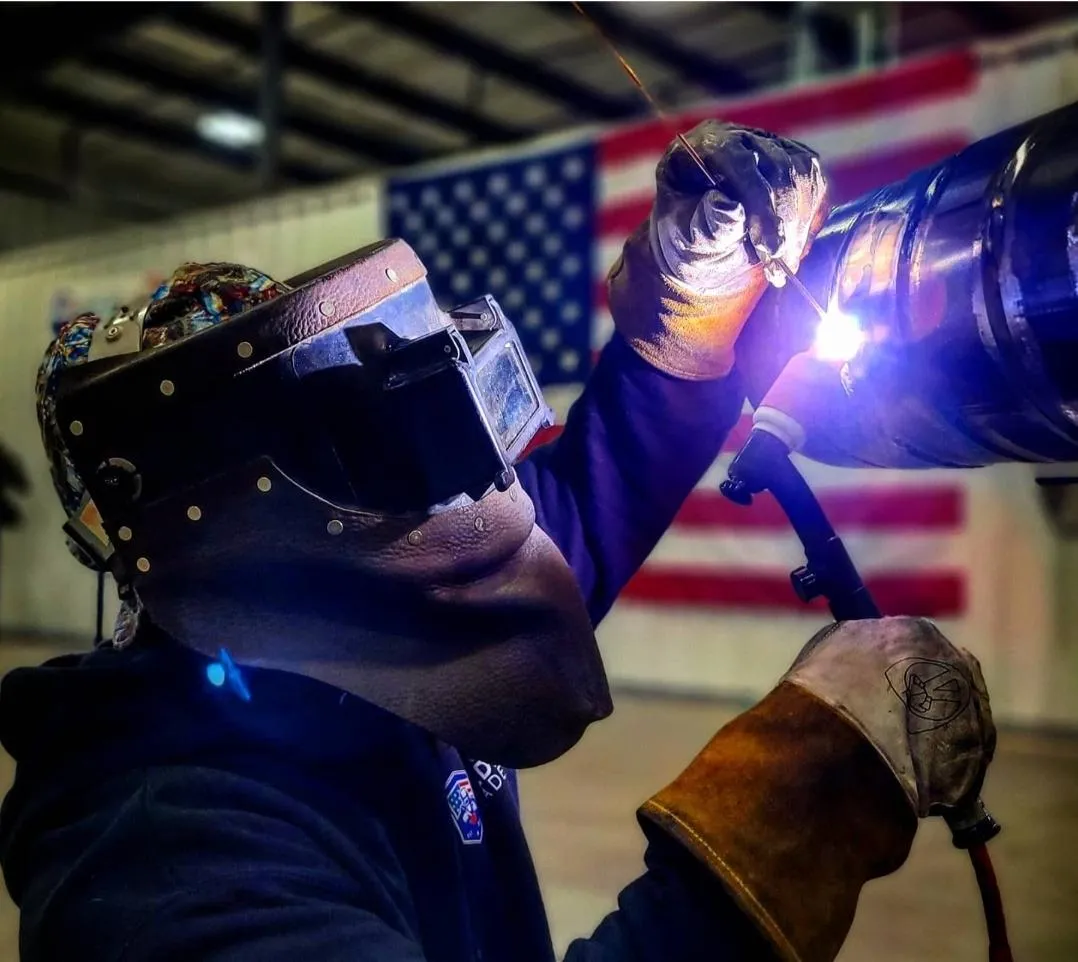
Back pain in the booth is usually a combination of three ergonomic risk factors in welding work. It can be an awkward posture, static positioning, and forceful effort. Awkward posture is the obvious one: leaning forward, twisting to see a joint, or craning your neck to manage your puddle. Static positioning is sneakier. Even a decent stance becomes a problem when you hold it too long, because muscles fatigue and start recruiting the lower back as a compensatory brace.
The third driver is continuous force, meaning the grip strength and steady tension you use to control the torch, stinger, or gun, plus the bracing you do through your core and legs to stay stable.
Add in real-world realities like tight spaces, poor reach, and the temptation to “just finish this weld” without resetting your body, and pain becomes predictable rather than mysterious. The goal of ergonomics is not comfort for comfort’s sake. It is keeping you accurate, steady, and safe for the long run.
Body Positioning That Protects Your Spine in Welding Work
Start with one principle for welding work. Move the work to you whenever possible, rather than folding yourself around the work. A solid baseline is to position the workpiece as flat as you can on a horizontal surface, set between waist and elbow height, because that range supports comfort and precision without forcing a deep bend at the lower back. If you are sitting, aim for material slightly below elbow level so your shoulders can stay down and your neck can stay more neutral.
One extra habit that protects your neck: lower your helmet with your hand instead of snapping your head down, since that repeated “jerk” adds up over weeks and months. None of these tips requires superhuman flexibility. They are simply ways to keep your spine closer to neutral while still getting good visibility and control.
Stretching Routines That Actually Fit a Welder’s Day
Stretching in welding work does not need to become a whole workout plan to be useful. What matters most is timing and consistency: brief warm-ups before you load heavy gear or settle into precision work, then quick microbreaks to undo static postures before they turn into pain. If you only stretch at night after the damage is done, it can feel good, but it will not protect you as well as spreading small resets across the day.
Here is a simple routine you can keep realistic:
Pre-shift (2 to 3 minutes): Gentle warm-up stretches before lifting or moving heavy items, especially if you are handling cylinders, leads, or awkward loads.
Between welds (20 to 40 seconds): Shoulder rolls, neck turns within a comfortable range, and a quick chest opener to counter hunching; keep it easy and controlled.
Mid-shift reset (1 to 2 minutes): Hip flexor stretch and a gentle standing back extension to offset forward bending; stop if anything feels sharp or radiates.
Equipment and Setup Changes That Reduce Strain
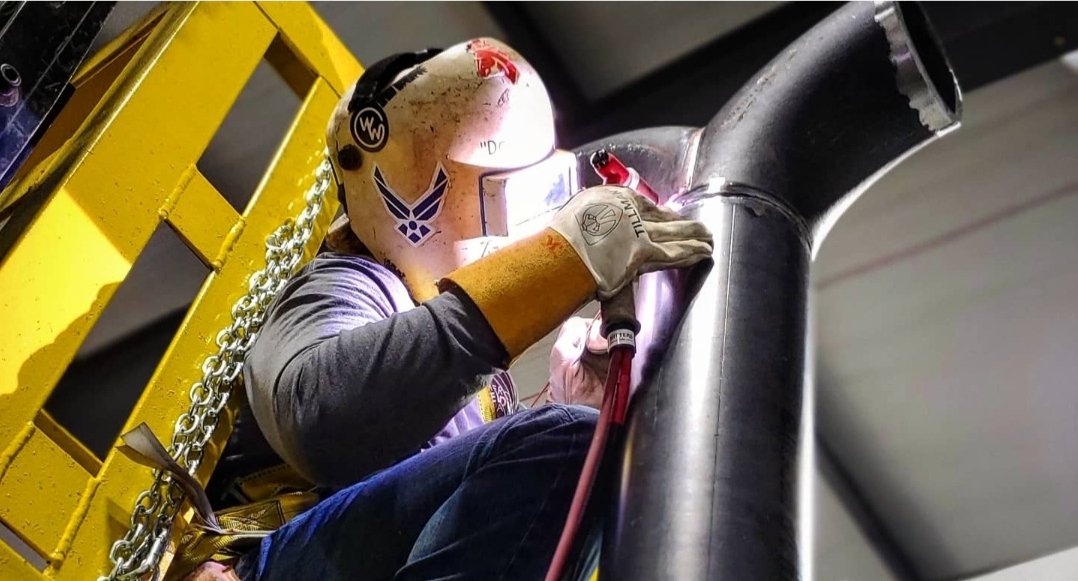
When you can, prioritize engineering fixes over toughing it out. Changing the setup reduces exposure to risk factors at the source. Use positioning aids to accommodate work posture, which can mean fixtures, jigs, or supports that hold the work at a better height and angle so your back does not have to.
A practical equipment checklist for back-friendly welding includes:
Height help: Adjustable tables, stands, or work supports that let you keep the joint between waist and elbow height when feasible.
Positioning aids: Clamps, jigs, and fixtures that reduce the need to hold parts in place while you weld.
Movement aids for heavy items: Trolleys or mechanical hlp for cylinders and other heavy loads, and team lifts when needed, because manual hero lifts are a common back-injury trigger.
Lighting discipline: Adequate general lighting and task lighting reduce the tendency to crane your neck forward just to see the puddle clearly.
Even if you are not the shop owner, you can often advocate for one small change, like adding a footrest, staging tools within reach, or using a simple fixture. Those little adjustments can compound into noticeably less soreness over time.
Train Smart at American Welding Academy
Learning strong techniques should include learning how to take care of your body while you work, because a long welding career is built on repeatable habits you can sustain. At the American Welding Academy, our students train in hands-on programs like Pipe Welding and Fabrication, with an emphasis on real-world readiness and the discipline to meet code-level expectations. If you want training that treats professionalism and work habits as part of the craft, connect with us online or call (636) 800-9353 to discuss your options.
