


Welding for Defense and Naval Shipbuilding: NAVSEA Standards and Submarine-Grade Alloys
Submarines and defense vessels operate under extreme environmental pressures, deep submerged forces, and severe mechanical loads. Carrying out high-caliber welding work in defense shipbuilding means upholding some of the most rigorous quality standards in the entire fabrication trade. Every joint follows a strictly controlled written procedure, and every operator must demonstrate certified, repeatable skill.
For anyone considering a career path in marine fabrication, understanding these expectations offers a clear view of how high-level defense manufacturing operates.
What Sets Naval Marine Fabrication Apart
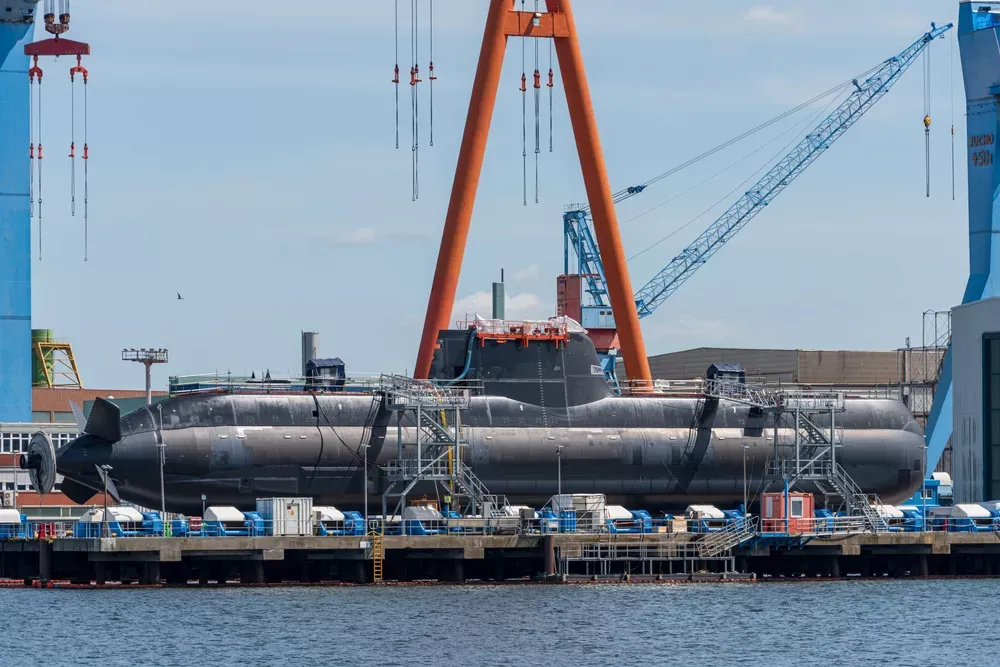
Commercial welding work requires strict adherence to industry safety and quality standards, but naval construction raises those requirements significantly. A submarine hull, for instance, must withstand immense hydrostatic pressure while maintaining structural integrity during operational maneuvers and potential underwater shocks.
Consequently, defect tolerance in critical naval joints drops close to zero. Minor flaws like micro-porosity, slight undercut, or incomplete joint fusion that might pass in lower-stakes applications result in immediate rejection.

Furthermore, material preparation and quality control protocols apply with zero tolerance for shortcuts:
Comprehensive Nondestructive Testing. Non-critical joints may undergo visual inspection, but critical structural and piping welds regularly undergo 100% volumetric testing using radiography (RT) or ultrasonic testing (UT).
Strict Material Handling. Electrodes and filler materials must be stored in temperature-controlled holding ovens to eliminate ambient moisture.
Cross-Contamination Prevention. Dedicated tools, grinding wheels, and wire brushes are segregated strictly by alloy. Tools used on carbon steel never make contact with stainless steel or nickel alloys.
Controlled Interpass Temperatures. Heat input is carefully monitored and logged during every pass using calibrated digital pyrometers to preserve base metal metallurgy.
This heightened operational discipline builds directly on fundamental shop practices, executed with total consistency.
Understanding NAVSEA Standards and Documentation
Naval Sea Systems Command (NAVSEA) establishes the technical requirements governing Navy vessel construction, maintenance, and repair. Defense shipyards build according to these specialized NAVSEA publications rather than general commercial structural codes.
Key documents that define defense fabrication include:
NAVSEA Technical Publication S9074-AQ-GIB-010/248: Governs welding and brazing procedure qualifications and performance qualification testing.
NAVSEA Technical Publication S9074-AR-GIB-010/278: Sets criteria for fabrication welding, joint design, and inspection requirements.
MIL-STD-1689: Details structural fabrication standards for ship hulls and primary supports.
In this environment, documentation holds as much weight as the physical weld bead. A Welding Procedure Specification (WPS) mandates exact electrical parameters, travel speeds, shielding gas flow rates, and preheat ranges. Welders must operate strictly within these variables. Consumables are tracked meticulously by heat and lot numbers, ensuring complete traceability from the steel mill to the finished joint.
Working with HY-80 and HY-100 Submarine-Grade Steels
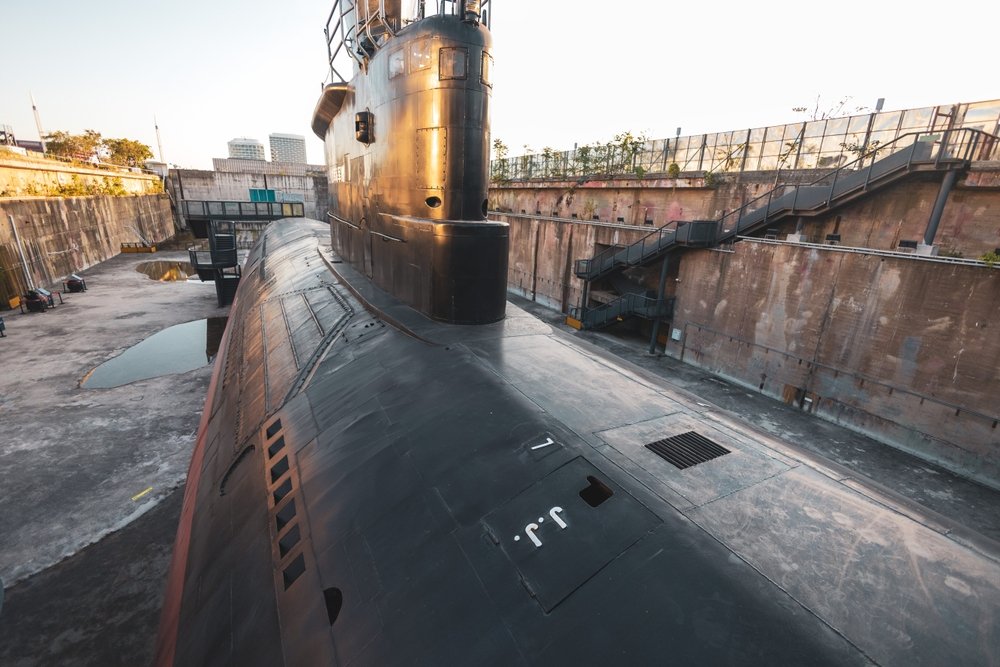
Submarine hulls and heavy structural elements frequently utilize quenched and tempered low-alloy steels, designated by their high yield strength. HY-80 delivers a minimum yield strength of 80,000 psi, while HY-100 offers a minimum yield strength near 100,000 psi. Additions of nickel, chromium, and molybdenum give these alloys exceptional toughness at low ocean temperatures, but those same elements make the steel sensitive to improper heat input.
The primary hazard when performing welding work on high-yield steel is hydrogen-assisted cracking, which can occur hours or days after a joint cools. To prevent cracking, technicians enforce precise controls:
Continuous Thermal Control. Strict preheat, interpass, and post-heat temperatures are maintained continuously throughout the process.
Low-Hydrogen Consumables. Electrodes are pulled from holding ovens in limited quantities and exposed to atmospheric air for only short, strictly monitored windows.
Controlled Heat Input. Weave width and travel speed are restricted to avoid burning out alloying elements or altering the quenched-and-tempered grain structure.
Delayed Inspection Schedules. Final nondestructive testing is frequently delayed for 24 to 72 hours after completion to catch late-emerging hydrogen cracks.
While newer high-strength low-alloy materials like HSLA-80 and HSLA-100 offer improved weldability, HY-series steels remain vital in naval shipbuilding.
How Defense Shipyards Hire and Where Your Training Begins
Major defense yards, such as Newport News Shipbuilding, General Dynamics Electric Boat, Bath Iron Works, and Ingalls Shipbuilding, along with government naval shipyards and hundreds of tier-one subcontractors, regularly recruit entry-level and experienced craftsmen. However, most defense employers do not expect new hires to arrive already certified in specialized NAVSEA standards.
Instead, shipyards look for candidates with solid foundational skills who can pass a standard qualification test, interpret engineering drawings, follow safety protocols, and accept structured instruction. Once hired, employers provide the specialized, internal qualification programs necessary to execute specific NAVSEA procedures.
Building a lasting career in naval fabrication starts with mastering fundamental processes: Shielded Metal Arc Welding (SMAW), Gas Metal Arc Welding (GMAW), and Gas Tungsten Arc Welding (GTAW), on basic carbon steel plates and pipe joints. Trying to tackle high-yield alloys or advanced codes without a firm grasp of puddle control, joint fit-up, and thermal management typically leads to frustration.
Mastering the Puddle, Building the Career
At the American Welding Academy (AWA), we focus on teaching the fundamental skills, practical discipline, and muscle memory needed to enter the welding trade with confidence. We do not offer overly specialized or highly niche qualification tracks, because every advanced specialization, including defense and naval shipbuilding, begins with core proficiency.
Our hands-on training programs center on mastering essential processes, proper joint preparation, blueprint reading, and safety practices. By mastering these core capabilities under experienced instructors, you gain the practical grounding required to pass initial employer weld tests and adapt to company-specific training programs. If you are ready to start your welding work journey, contact us online or call (636) 800-9353 to speak to an admissions advisor regarding the best way forward to reach your career goals.
