3 Progress Parkway, Union, Missouri 63084
Follow Us:


Learn. Build. Succeed.
Your Welding Journey Starts Here.
Welcome to the American Welding Academy Blog — your source for welding insights, training tips,
student success stories, and industry news. Stay informed, stay inspired, and keep building your future one weld at a time.
The Science of Heat-Affected Zones Why Understanding Metallurgy Will Improve Your Welding Skills
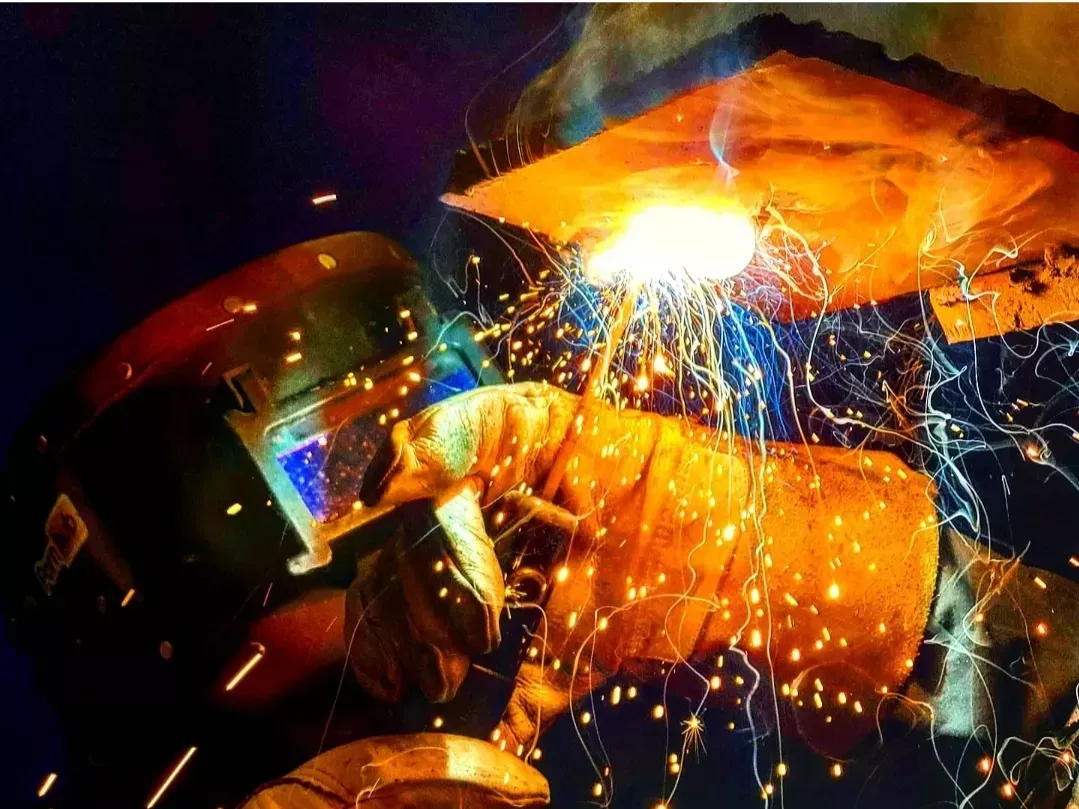
If you want more consistent results, learning what happens in the heat-affected zone (HAZ) can upgrade your welding skills faster than chasing random machine settings. The HAZ is the part of the base metal that does not melt but still undergoes changes in properties because it experiences the welding thermal cycle. These property shifts are a common reason joints fail next to an otherwise decent looking bead.
Understanding the Transition Region
A weld is not just weld metal plus base metal. Between them sits a transition region where temperature rises and falls so quickly that the internal structure of the material changes, even though it never reaches a liquid state. The HAZ sits between the fusion zone and the unaffected parent metal. Its size depends on the thermal properties of the material plus how much energy you apply and for how long.
In conventional steels, the HAZ is organized into specific subregions:
Grain-Coarsened Zone: Located closest to the weld where the highest temperatures occur.
Grain-Refined Zone: A region where the grain structure is smaller and often tougher.
Intercritical Zone: A partially transformed area farther from the heat source.
Tempered Zone: The outermost region where existing structures are softened by heat.
Each subregion responds differently to loading, impact, and service conditions. This means one good procedure on paper can still produce a weak link if the thermal cycle is incorrect for that joint.
Managing HAZ Risk on the Shop Floor
Wider heat-affected zones usually come from higher heat input, slower travel, or longer time at temperature. This provides more opportunity for unwanted microstructural changes. Conversely, a smaller HAZ typically comes from lower heat input and faster cooling. However, cooling that is too fast can create hardness and cracking issues in some steels. To protect your welding skills, you must find a balance.
Metallurgy is essentially the recipe your metal follows as it heats and cools. A common way to measure cooling behavior in steel is the time it takes to cool from 800°C to 500°C, known as t8/5.
Rapid Cooling: When t8/5 is very short, steels can become hard and brittle, which reduces ductility and traps hydrogen that causes cold cracking.
Slow Cooling: When cooling is too slow, it can reduce the yield and tensile strength in certain high-strength steels.
Practical Adjustments for Better Results
For day to day work, you can manage these thermal cycles through specific adjustments. Using preheat and interpass control slows the cooling curve so hydrogen has more time to diffuse out. Additionally, travel speed and heat input choices affect how long the surrounding material stays in critical temperature ranges.
Treating each joint like a heat management problem rather than just a puddle control problem is essential for professional welding skills. Instead of only watching the bead shape, observe what your choices are doing to the surrounding base metal. The visible color bands on stainless steel are not the same thing as the HAZ itself, so appearance alone can be misleading when judging thermal impact.
Improving Quality Through Metallurgy
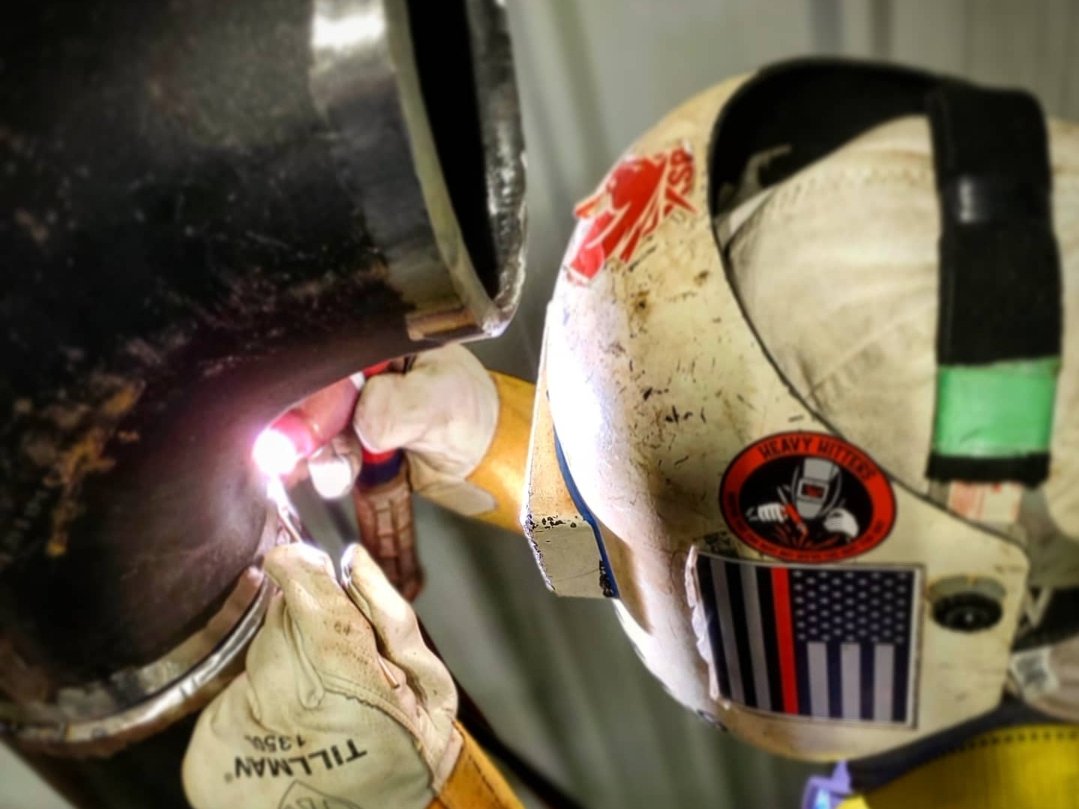
Defects are not only technique problems; they are often thermal cycle problems. When you add HAZ awareness to your welding skills, you start connecting the dots between what you see in real time and what the joint becomes after it cools. Use this practical approach to apply metallurgy on the job:
Plan Heat Flow: Choose joint fit-up and sequences to limit unnecessary reheating of the same area.
Control Cleanliness: Keep consumables dry to prevent hydrogen-related issues that are aggravated by fast cooling.
Record Data: Note settings, travel rates, and preheat levels on successful jobs so you can repeat the thermal cycle.
Master the Fundamentals at American Welding Academy
Honest training helps you predict how your choices change microstructure and crack susceptibility. You do not need to memorize complex phase diagrams to improve your welding skills, but you do need enough metallurgical literacy to build reliable joints.
The American Welding Academy (AWA) offers hands-on training paths such as Pipe Welding and Fitting or Fabrication Welding and Fitting. Students at AWA are tested using stringent criteria. Our structured approach ensures that quality is earned through meeting industry standards.
To strengthen your fundamentals, visit the American Welding Company online at https://www.awaweld.com or call (636)800-9353 to discuss training programs that will take your welding skills to the next level.

With over 150 years of combined experience, let us help you build your career in welding. Your future starts here.
Copyright © 2025 All rights reserved The Welding Academy