3 Progress Parkway, Union, Missouri 63084
Follow Us:


Learn. Build. Succeed.
Your Welding Journey Starts Here.
Welcome to the American Welding Academy Blog — your source for welding insights, training tips,
student success stories, and industry news. Stay informed, stay inspired, and keep building your future one weld at a time.
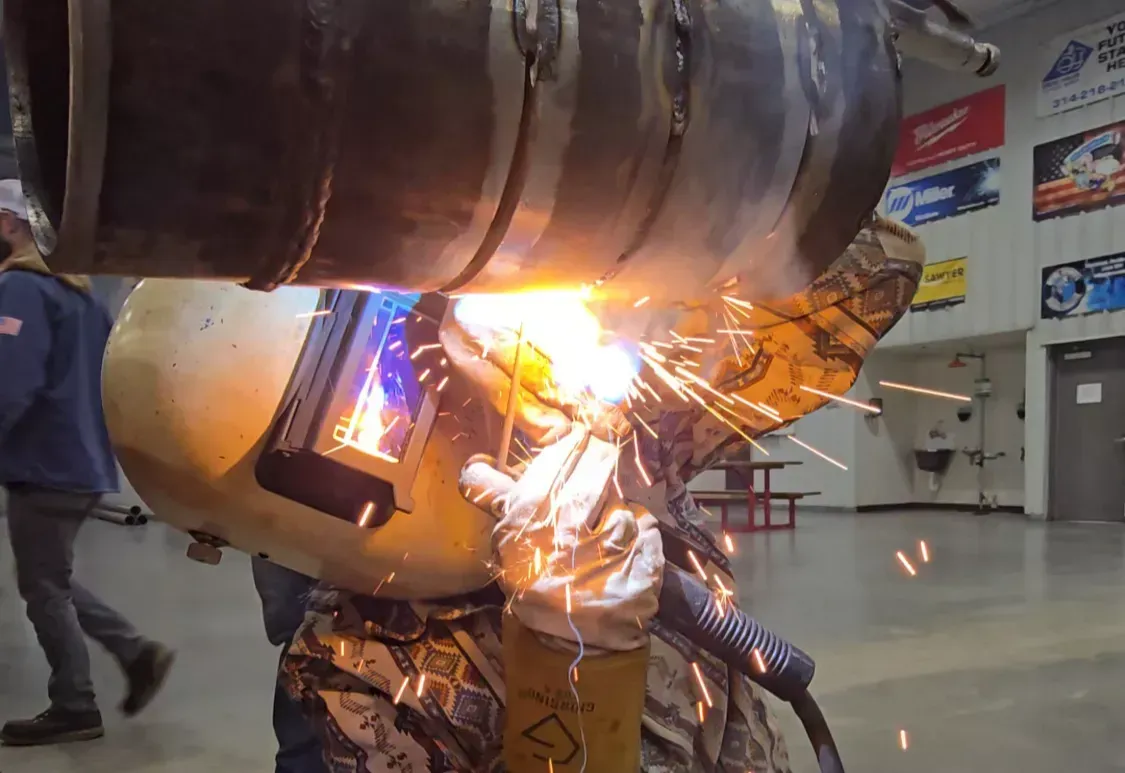
The Soft Skills of a Hard Trade Communication on the Job Site
Welding is physical, technical, and demanding. Most people entering welding training focus on mastering the arc, reading the heat, and laying down solid beads. Those things matter. But there is something just as important that often gets overlooked: the ability to communicate. On a real job site, communication can be the difference between a project that runs smoothly and one that falls apart.
Effective communication in welding isn't just about technical talk with the foreman. It involves clearly understanding and interpreting blueprints, safely relaying potential hazards to colleagues, and offering concise updates on progress. Misunderstandings about specifications or delays in reporting an equipment malfunction can lead to costly rework, schedule slippages, and, most critically, safety incidents. Therefore, seeing communication as a core competency, not just a soft skill, is essential for career success in the trade.
Beyond Technical Skill: Why Performance Alone Is Not Enough
Technical skill will get you hired. It will not always keep you there. Employers want welders who can work within a team, follow instructions clearly, and flag problems before they become costly mistakes.
A welder who produces quality work but refuses to listen, ask questions, or speak up creates problems. Supervisors and crew leads depend on every member of the team to stay in the loop. If you cannot communicate what you are doing or what you are seeing, the whole operation slows down.
Here is what good communication looks like in practice:
Listening actively when a foreman gives direction, not just nodding along.
Asking for clarification when a task or instruction is not completely clear.
Speaking up when you notice a potential issue, a safety concern, or a discrepancy in the work.
Giving honest updates on where you are in a task rather than guessing or assuming.
Viewing Blueprints as a Channel of Communication
Mastering blueprints and technical drawings transcends mere technical proficiency; it is the primary medium through which a job site conveys expectations. Before a single word is exchanged, these plans convey the project's requirements.
A welder unable to interpret these documents necessitates constant manual intervention from the foreman, consuming valuable time. On larger-scale projects, this inefficiency translates into financial losses, diminished trust, and jeopardized future opportunities.
Learning to interpret welding symbols, dimensions, and joint specifications is a core part of becoming a welder who is taken seriously on the job. Treat plan reading as a language. The more fluent you become, the less friction there is between you and the work.
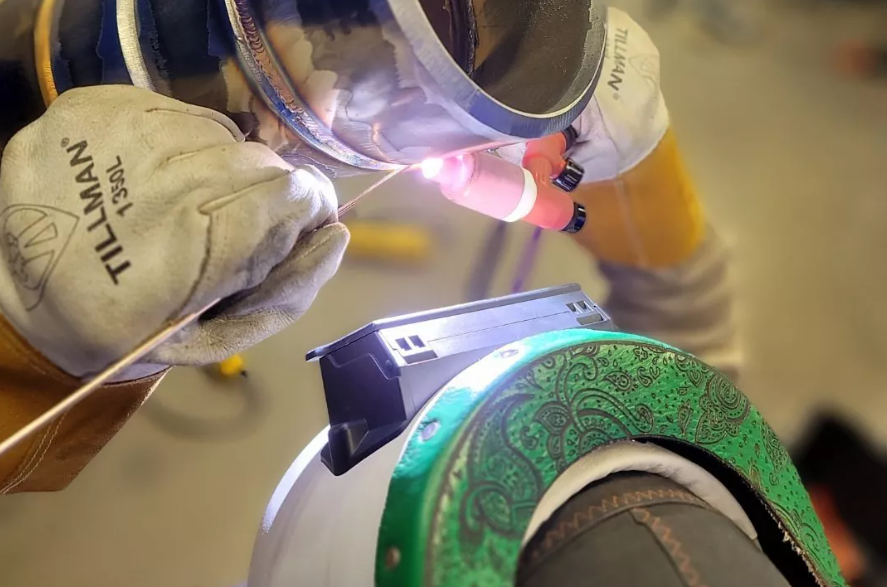
Building Rapport With Your Foreman
Trust builds the relationship between a welder and their foreman. Consistent, honest communication establishes that trust.
Whether something goes wrong, you need more time, or instructions seem to conflict with what the drawings show, speak up. Foremen appreciate the skilled welders who communicate early. They do not appreciate finding out about a problem after it has already been welded shut.
Here are some habits that build a strong working relationship with your foreman:
Show up informed by reviewing the plan for your section before the shift starts.
Report issues immediately rather than hoping they will resolve themselves.
Use clear, direct language without over-explaining or making assumptions.
Take feedback without getting defensive, even when it is delivered bluntly.
The Role of Respect and Professionalism
A job site has a hierarchy. Experienced welders, foremen, inspectors, and project managers all play a role. Respecting that structure is not a sign of weakness, it is a sign of maturity.
New welders who carry themselves with humility tend to earn trust faster than those who assume they already know everything. You are there to learn how this specific crew operates. Pay attention. Adapt. Grow.
Professionalism also means keeping your attitude steady even on difficult days. Exhaustion, heat, and pressure are part of the trade. The way you carry yourself through those moments says a great deal about who you are as a worker.
Effective communication is the cornerstone of a safe and efficient job site. This includes listening to instructions, clearly reporting issues or potential hazards, and providing constructive feedback when appropriate. Never be afraid to ask a clarifying question. It is far better to seek guidance than to make an assumption that leads to a costly mistake or, worse, an injury.
AWA: Welding Training for a Complete Professional Career
At the American Welding Academy (AWA), welding training goes beyond technique. Students learn what it actually means to enter the workforce with confidence, humility, and the communication skills that employers value.
AWA programs include pipe welding, fabrication, and fitting, all designed to help students meet industry code standards. Life skills including on-the-job expectations, workplace conduct, and professional communication form part of our education.
If you are ready to take the first step, visit www.awaweld.comor call the American Welding Academy team at (636) 800-9353. Real careers in welding jobs start with solid training and the right habits from day one.
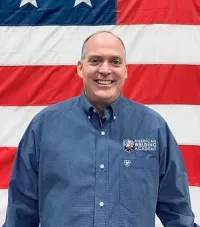
With over 150 years of combined experience, let us help you build your career in welding. Your future starts here.
Copyright © 2025 All rights reserved The Welding Academy