


Aerospace Welding: Building Aircraft & Space Components | American Welding Academy
Today, aerospace welding ranks among the most demanding disciplines in the welding industry. This career fuses distinct metals for aircraft, spacecraft, and defense systems. Operational stakes remain extraordinarily high for every technician. One flawed joint can compromise the structural integrity of critical flight vehicles. An appreciation of these rigorous requirements will help you choose an ideal future pathway.
Why Aerospace Welding Demands Extreme Precision
Aerospace welding is unforgiving. Every joint must meet strict tolerances. These tolerances are often measured in fractions of a millimeter. The components involved carry people, sensitive equipment, and mission-critical systems.
Precision welding at this level requires more than technical ability. Welders must maintain intense concentration, steady hands, and work with constant composure. They also need to understand how heat affects different metals. Distortion, warping, and cracking are constant concerns. Managing these challenges is a core part of the daily work.
The Materials That Make Aerospace Welding Unique
Aerospace components utilize advanced, high-performance alloys rather than standard steel. This industry relies on materials that are lightweight, heat-resistant, and incredibly strong. Some of the most common materials include:
Titanium alloys
Inconel and other nickel-based superalloys
Aluminum alloys
Specialty composites used in structural assemblies
Each material behaves differently under heat. Titanium, for example, reacts badly to oxygen during the welding process. It must be welded in a tightly controlled environment. Aluminum requires very careful heat management to avoid distortion. These materials demand deep knowledge and consistent practice before a welder can work with them confidently.
Certification Standards in Aerospace Welding
Certification is non-negotiable in this field. Welders must meet strict industry codes and quality requirements. There is no room for shortcuts. Employers verify compliance regularly, and your welds must hold up under inspection every time.
Several key organizations govern standards in this space. These include:
The American Welding Society (AWS), which sets widely recognized welding codes
NADCAP (National Aerospace and Defense Contractors Accreditation Program)
AS9100, the quality management standard for aviation, space, and defense
MIL-STD specifications used for military aerospace applications
Earning these credentials takes time and demonstrated skill. Testing, documentation, and inspections are all part of the process. Companies in this sector take quality control seriously. Your reputation as a welder depends on consistency.
Building Your Foundation for Aerospace Welding
A career in this specialty field does not occur overnight. It begins by mastering elementary welding procedures. Processes like TIG (GTAW) welding are especially vital to study thoroughly. Blueprint interpretation and basic metallurgy knowledge also remain indispensable in this field.
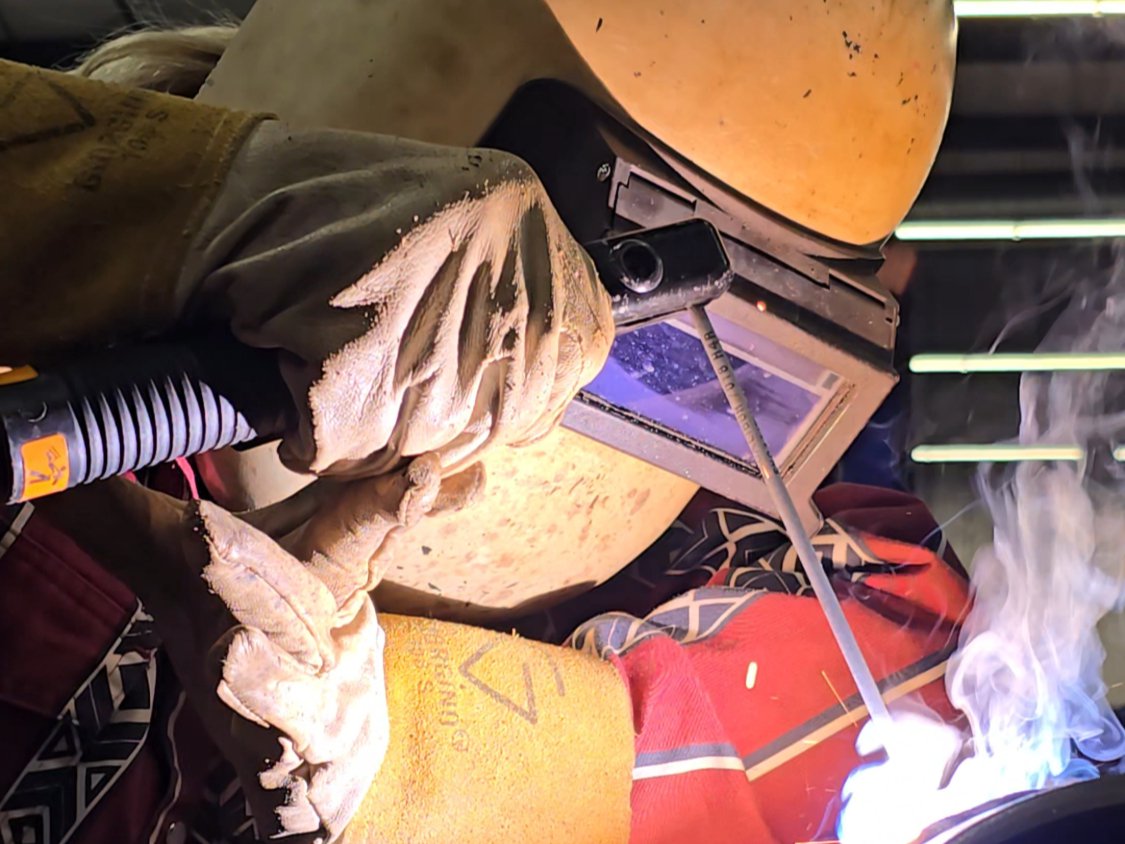
The right technical training makes a significant difference. Robust foundational proficiency grants access to specialized sectors later. Lacking these competencies makes pursuing advanced validation much tougher as time passes.
The American Welding Academy (AWA) offers welding training that focuses on building the core competencies required to succeed in this field. Every student must meet the code standard to complete the program, which covers areas such as pipe welding, fabrication, and fitting. Instructors evaluate every learner according to strict regulatory codes.
AWA also emphasizes professional development that includes communication, work ethic, and professional workplace expectations. The combination of competence and professionalism is an ideal trait that employers are seeking.
Take the First Step Toward Your Welding Career
If aerospace welding interests you, the smartest move you can make right now is to build your foundation. You need strong base skills before stepping into any specialty. That takes the right environment, the right instruction, and a real commitment to doing the work.
American Welding Academy is here to help you get started on the right foot. Our programs are hands-on, standards-based, and designed with your long-term success in mind. Visit us at www.awaweld.com or call us at (636) 800-9353 to learn more about our programs and find the right fit for you.
Frequently Asked Questions
Do I need a college degree to pursue aerospace welding?
No. Most aerospace welding positions require trade school training and industry certification, not a college degree. Practical skills and certified credentials carry the most weight in this field.
Is TIG welding the only process used in aerospace applications?
TIG (GTAW) is the most widely used process because of the precision it allows. However, other methods like electron beam welding and friction stir welding are also used depending on the specific application and material involved.
How competitive is the hiring process for aerospace welding positions?
It is competitive. Employers in this sector look closely at certification levels, attention to detail, and work history. Strong professional habits and a consistent track record matter just as much as technical ability.
