


Mastering TIG Welding Advanced Techniques for Precision Fabrication
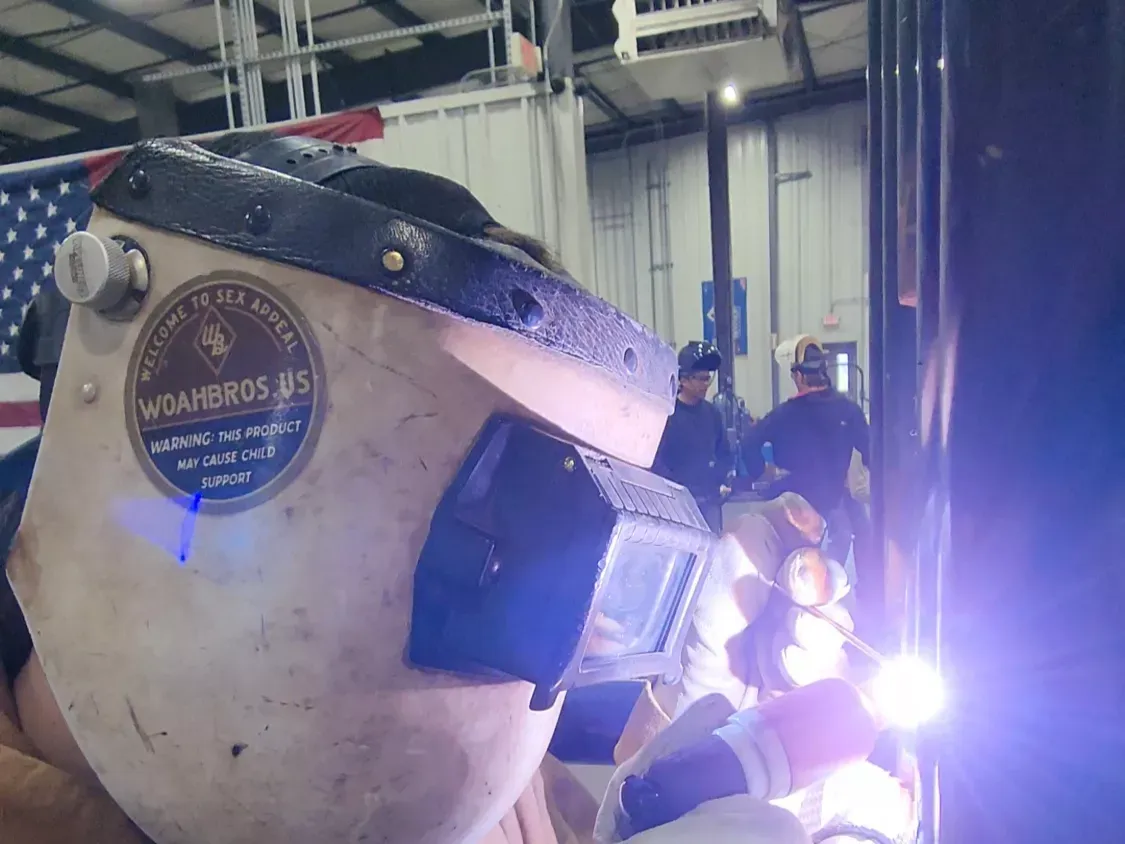
Mastering TIG welding demands a blend of motor control, heat management, and absolute clean-metal discipline. Known formally as Gas Tungsten Arc Welding (GTAW), TIG welding utilizes a non-consumable tungsten electrode to produce precise, high-integrity joints across various alloy types. While alternative methods prioritize speed and deposition rates, fabricators rely on TIG welding when structural integrity, cosmetic finish, and thermal control take priority over raw speed.
Core Mechanics and Process Fundamentals
The process relies on an electric arc struck between the non-consumable tungsten and the workpiece. A stream of inert gas, typically 100% argon or helium blends, shields the molten weld pool and tungsten from atmospheric oxygen and nitrogen.
Fabricators prefer TIG welding for non-ferrous metals and thin-gauge materials due to several distinct mechanical advantages:
Independent Heat Control: A foot pedal or thumb wheel adjusts amperage independently of filler wire deposition rates, allowing real-time thermal management.
Minimal Spatter: Because no wire feeds through the torch arc stream continuously, the process creates clean, spatter-free weld deposits.
Multi-Material Capability: The same basic setup handles stainless steel, aluminum, copper alloys, chromoly, and titanium with slight tungsten, gas, and current adjustments.
Refining Precision Technique
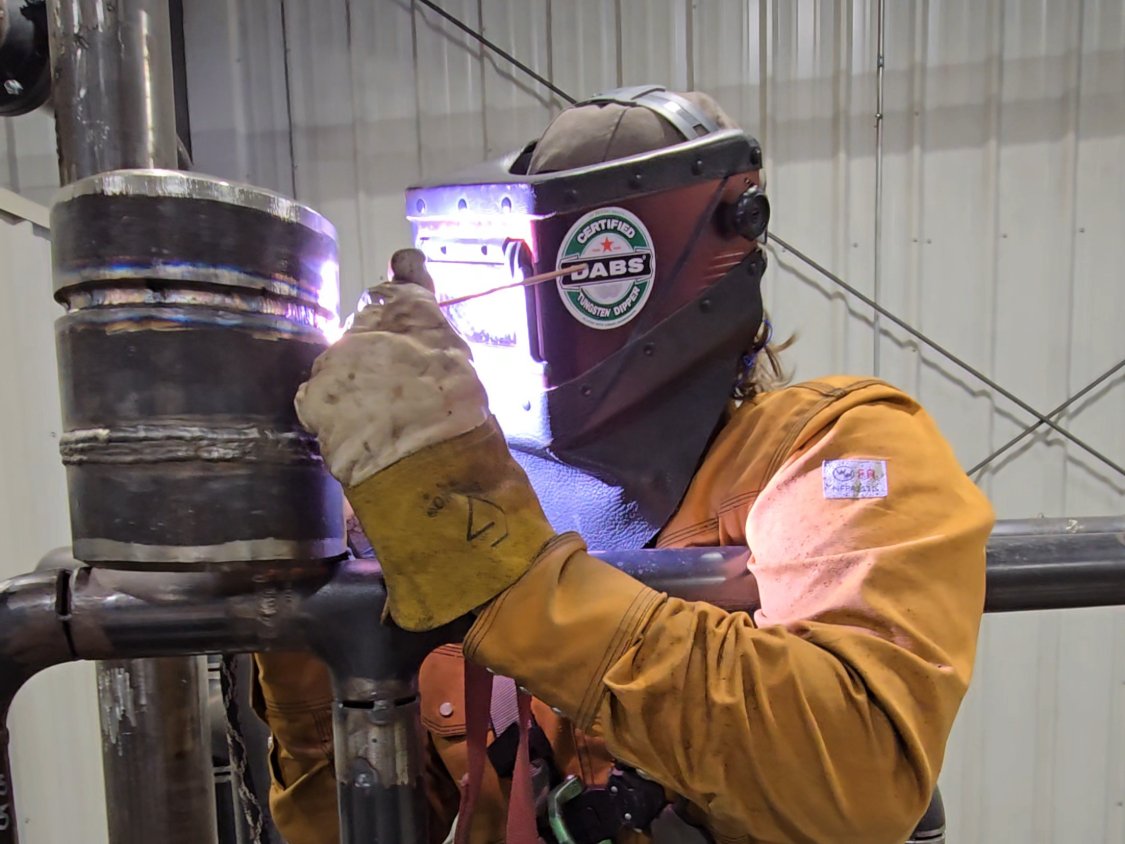
Achieving smooth weld beads requires total coordination between torch hand, foot pedal, and filler rod hand. Small posture changes or hand slips alter the arc and ruin joint geometry.
To elevate your puddle control and bead consistency, implement these practical bench practices:
Maintain a Tight Arc Length. Keep the tungsten tip within 1/16 to 1/8 inch of the base plate. Long arc lengths raise voltage, widen the puddle, and cause excessive heat input.
Match Tungsten Grind to Current. Grind electrodes lengthwise (parallel to the tungsten body) using a dedicated diamond wheel. Use a sharp point for DC steel welding, and a slight truncated flat for AC aluminum balance.
Establish a Rhythm. Feed the filler rod directly into the leading edge of the puddle using a controlled dabbing motion. Avoid dripping filler off the tungsten tip.
Degauss and Prep Base Metals. Mechanically strip mill scale, anodizing, or oxide films using stainless steel wire brushes. Wipe surfaces down with acetone prior to arc strike.
Troubleshooting Common Process Defects
Even seasoned fabricators encounter puddle instabilities and joint contamination. Identifying the root cause quickly saves labor hours and prevents material scrap.
Defect / Issue | Primary Cause | Immediate Correction |
Tungsten Contamination | Electrode dipped into base metal or touched filler wire | Stop immediately, snap or cut the dip point, and regrind a clean taper. |
Porosity & Discoloration | Inadequate shielding gas flow or turbulent drafts | Verify gas flow (typically 15–20 CFH), check gas lens mesh, and block surrounding air currents. |
Burn-Through / Warpage | Excessive heat input or slow travel speed | Increase travel speed, lower peak amperage, or shorten the pulse width on advanced machines. |
Lack of Penetration | Incorrect bevel, cold current, or wrong torch angle | Maintain a 10 to 15-degree push angle and verify root gap spacing. |
Critical Industrial Applications
Due to its reliability and cleanliness, TIG welding dominates several specialized manufacturing sectors:
Aerospace & Defense. Structural airframe components, engine manifolds, and turbine housings require zero-defect welds subjected to strict X-ray testing.
Sanitary Piping & Food Processing. Stainless tubing used in dairies, breweries, and pharmaceutical plants requires smooth, flush root passes to prevent bacterial traps.
Motorsports & Performance Fabrication. Chromoly roll cages and aluminum intercoolers demand high strength-to-weight ratios and neat cosmetic appearance.
Elevate Your Fabrication Career
Developing true proficiency in TIG welding requires dedicated floor time, instant feedback, and guided instruction. The American Welding Academy provides intensive, hands-on training tailored to real-world requirements. Students practice on industry-standard machinery while mastering various welding techniques.
To take the next step in your welding career, call The American Welding Academy at (636) 800-9353 or visit awaweld.com to explore training programs.
Frequently Asked Questions
Is TIG welding harder to learn than MIG welding?
TIG welding generally has a steeper learning curve. It requires more hand coordination and pedal control, but consistent practice helps build confidence quickly.
What safety gear do I need for TIG welding?
You will need a welding helmet with proper shade, flame-resistant clothing, gloves, and safety glasses. Proper ventilation is also important due to the heat and fumes produced.
Can TIG welding be used outdoors?
TIG welding is sensitive to wind because it relies on shielding gas. Outdoor projects often require wind barriers or enclosed work areas to maintain weld quality.
