


Welding Safety & Respiratory Protection: Fume Extraction Guide | American Welding Academy
Welding safety covers a lot of ground, from arc flash protection to fire prevention. But one of the most overlooked areas is what you breathe in while you work. Welding fumes carry real health risks. Protecting your lungs matters just as much as protecting your eyes and skin.
What Makes Welding Fumes Dangerous
Welding produces a mix of fine metal particles and gases. These come from the base metal, coatings, filler wire, and shielding gas.
Short-term exposure can cause dizziness, nausea, and throat irritation. Long-term exposure has been linked to serious lung conditions and other health issues. The risk depends on the metal being welded, the process used, and how well the space is ventilated.
Some metals and coatings are particularly hazardous:
Galvanized steel releases zinc fumes, which cause metal fume fever.
Stainless steel generates hexavalent chromium, a known carcinogen.
Painted or coated materials can release lead or other toxic compounds.
Manganese in certain filler metals has been linked to neurological effects.
Understanding these risks is the foundational step toward establishing a robust respiratory safety protocol. A deep comprehension of the hazards, which can range from simple dust and particulate matter to toxic fumes, gases, and volatile organic compounds (VOCs), is important for making smarter, evidence-based choices about both your personal protective equipment (PPE) and the engineering controls within your workspace.
This knowledge allows you to move beyond generic solutions and implement targeted, effective safety measures, ensuring that the gear you select and the fume extraction systems you install are appropriate for the specific chemical and physical agents present.
When a Standard Mask Is Not Enough for Welding Safety
A basic dust mask offers no meaningful protection against welding fumes. Even a standard N95 respirator has limits in high-exposure situations.
This is where PAPR systems come in. A Powered Air-Purifying Respirator uses a battery-operated blower to push air through a filter. It then delivers clean, filtered air directly into a welding helmet or hood. PAPRs do not require a tight face seal, which makes them more comfortable and more practical for extended use. They are also a strong option for welders with facial hair, where a tight-fitting respirator would not seal properly.
Key advantages of PAPR systems include:
Higher filtration performance compared to standard tight-fitting respirators.
Compatible with full welding helmets for combined eye and face protection.
More comfortable for long shifts and overhead work.
No fit test required when used with a welding helmet assembly.
PAPR systems are not the only option, but for higher-risk environments, they offer a level of protection that a simple mask cannot match.
Managing Airflow in Confined Spaces for Welding Safety
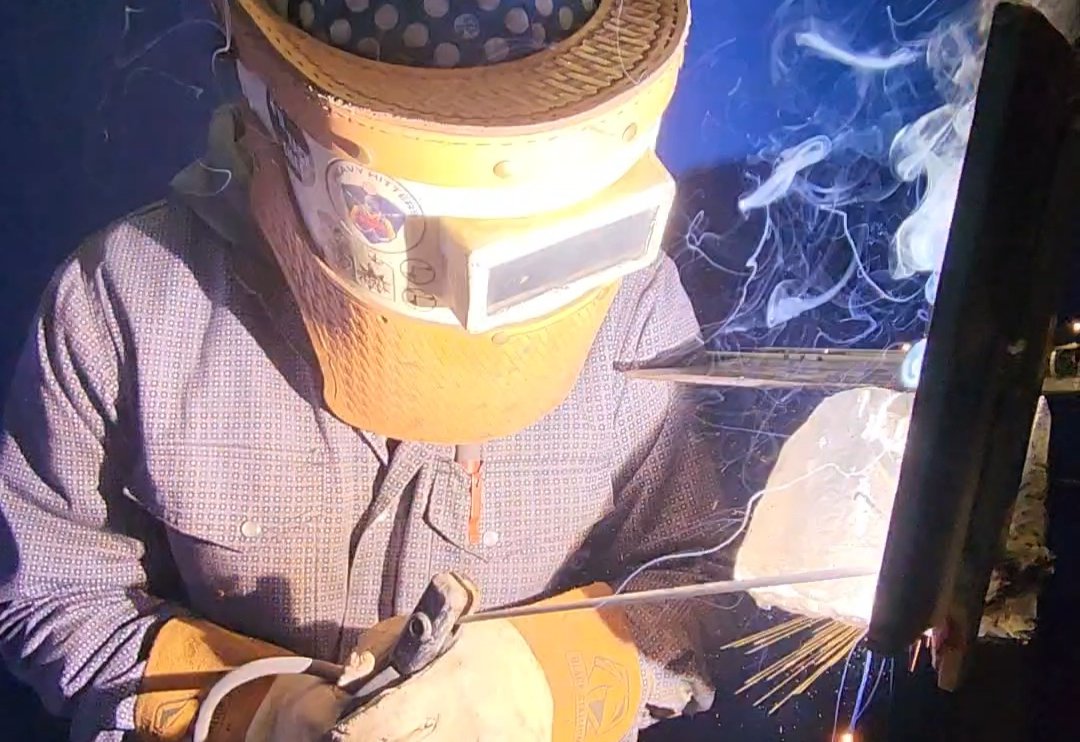
Airflow management is critical in any welding environment. It becomes even more critical in confined spaces. For pipe welders especially, working inside tanks, vessels, or tight enclosures is common. Fumes accumulate fast in these settings.
Confined space welding requires more than just a respirator. Local exhaust ventilation, or LEV, pulls fumes away from the source before they spread into the breathing zone. In spaces where LEV alone cannot capture all the fume, respiratory protection becomes a requirement, not a recommendation.
Proper airflow setup also prevents oxygen-deficient atmospheres, which can be deadly without warning. Always assess the space before striking an arc. Know where the fumes will travel and plan your ventilation accordingly.
Building Good Respiratory Habits
Respiratory protection only works when it is used correctly and consistently. A PAPR with a clogged filter or a respirator worn loosely offers little real protection.
Establish a routine. Inspect your equipment before each use. Replace filters on a set schedule. Store your respirator in a clean, dry location. Know the signs of filter saturation, including breathing resistance and reduced airflow. These habits protect you over the long run, not just today.
More than the equipment itself, your training and awareness are key components of a complete respiratory safety program. Always follow the manufacturer's guidelines for fitting and maintenance. Participate in all required training sessions and refresher courses. Understand the specific hazards in your work area and select the correct level of protection for the task at hand.
How American Welding Academy Approaches Safety
At the American Welding Academy, proper PPE use is part of the training from day one. Students learn not just how to weld, but how to protect themselves on the job. These are not optional extras. They are part of what it means to be a professional.
AWA's pipe welding and fabrication programs address real-world working conditions, including how to stay safe in confined and enclosed environments. Students graduate with both technical skills and the safety awareness employers expect.
Ready to transform your interest in welding into professional expertise? Visit www.awaweld.comto explore our programs, or call (636) 800-9353 to learn more about enrollment and how AWA can help you launch a career that lasts.
