


Welding Techniques for Exotic Alloys: Guide to Nickel, Titanium & Copper | American Welding Academy
When most people think of welding, they picture structural steel or carbon pipe. But some of the most demanding work in manufacturing happens with exotic alloys. Materials engineered for extreme environments. Understanding the right welding techniques for metals like nickel, titanium, and copper opens doors to aerospace, military, and high-performance industrial applications.
What Makes Exotic Alloys Different
Exotic alloys are not difficult to weld just because they're rare. They're difficult because each one punishes mistakes immediately.
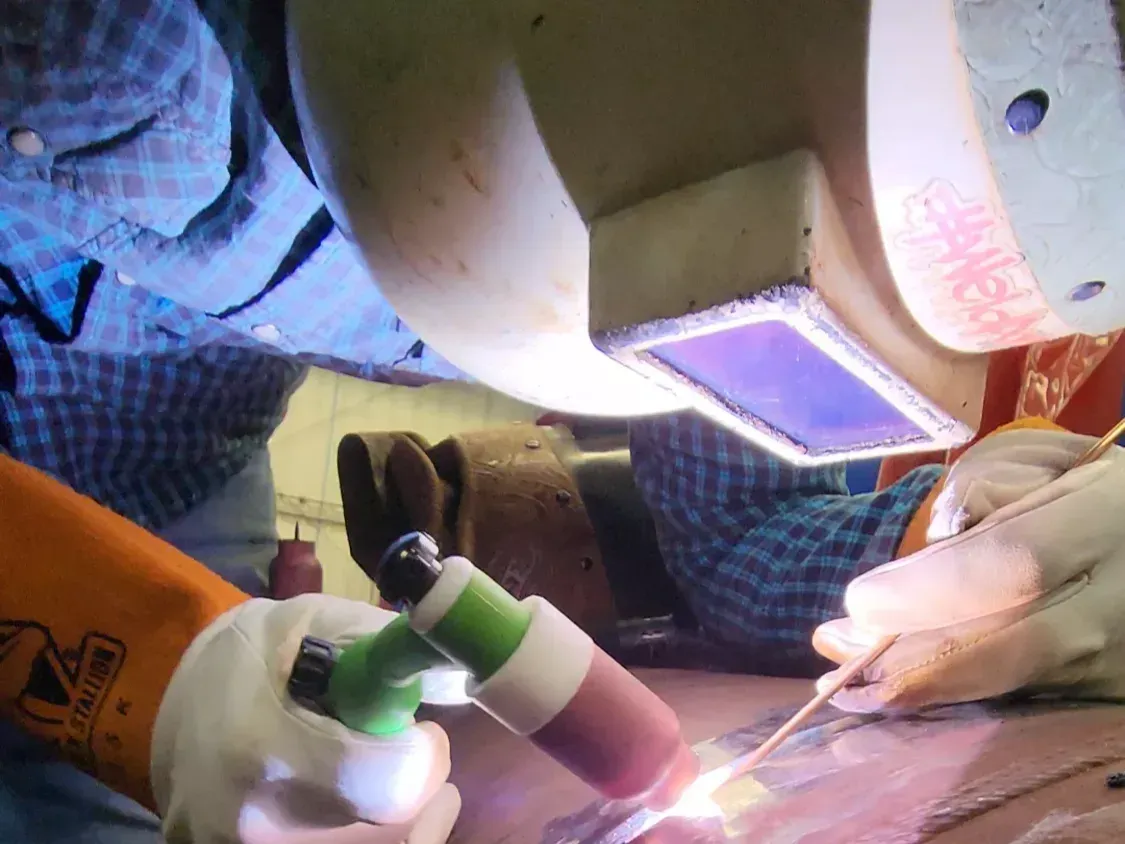
Nickel alloys resist high temperatures and corrosion, making them ideal for jet engine components and exhaust systems. Titanium is lightweight, extremely strong, and biocompatible, but it reacts aggressively to oxygen and nitrogen at welding temperatures. Copper conducts heat so efficiently that standard heat input settings often produce cold, incomplete welds without proper adjustment.
These properties don't make these metals unweldable. They just demand respect, preparation, and precise technique every time.
Properties and Welding Techniques in Aerospace and Military
These metals are critical to defense and aerospace because they survive where ordinary steel cannot:
Nickel alloys are used in aircraft engine turbines, exhaust systems, and military reactors, where components face both extreme heat and corrosive gases
Titanium alloys appear in airframes, landing gear, and armor plating due to their excellent strength-to-weight ratio and resistance to fatigue
Copper and copper alloys (like cupro-nickel) serve in heat exchangers, electrical systems, and naval piping, where thermal conductivity and corrosion resistance matter
Specialty metals like Inconel and Hastelloy fill gaps where standard stainless steel would fail under prolonged thermal stress
Each application carries strict code standards. Weld integrity isn't optional in aerospace or military use; it's verifiable and documented.
Welding Techniques and Equipment for Each Metal
The process you use matters as much as the metal itself. Here's what each alloy generally requires:
Nickel Alloys
TIG welding (GTAW) is preferred for thin sections requiring precision; MIG handles thicker sections with higher deposition rates
Use nickel-based filler metals matched to the base alloy (e.g., ERNi-1 for pure nickel)
Stringer beads and minimal weaving prevent solidification cracking, which nickel alloys are prone to
Interpass temperature must be controlled closely. Most nickel alloys cap at 250°C, while alloys like C276 require a maximum of 100°C
Titanium Alloys
GTAW (TIG) is the standard process; the work area must be blanketed in 100% argon shielding gas with a purity of at least 99.995%
Any oxygen exposure above 0.005% during welding contaminates the weld and causes embrittlement
Trailing shields and back-purge setups are required, not optional, for quality titanium welds
Copper and Copper Alloys
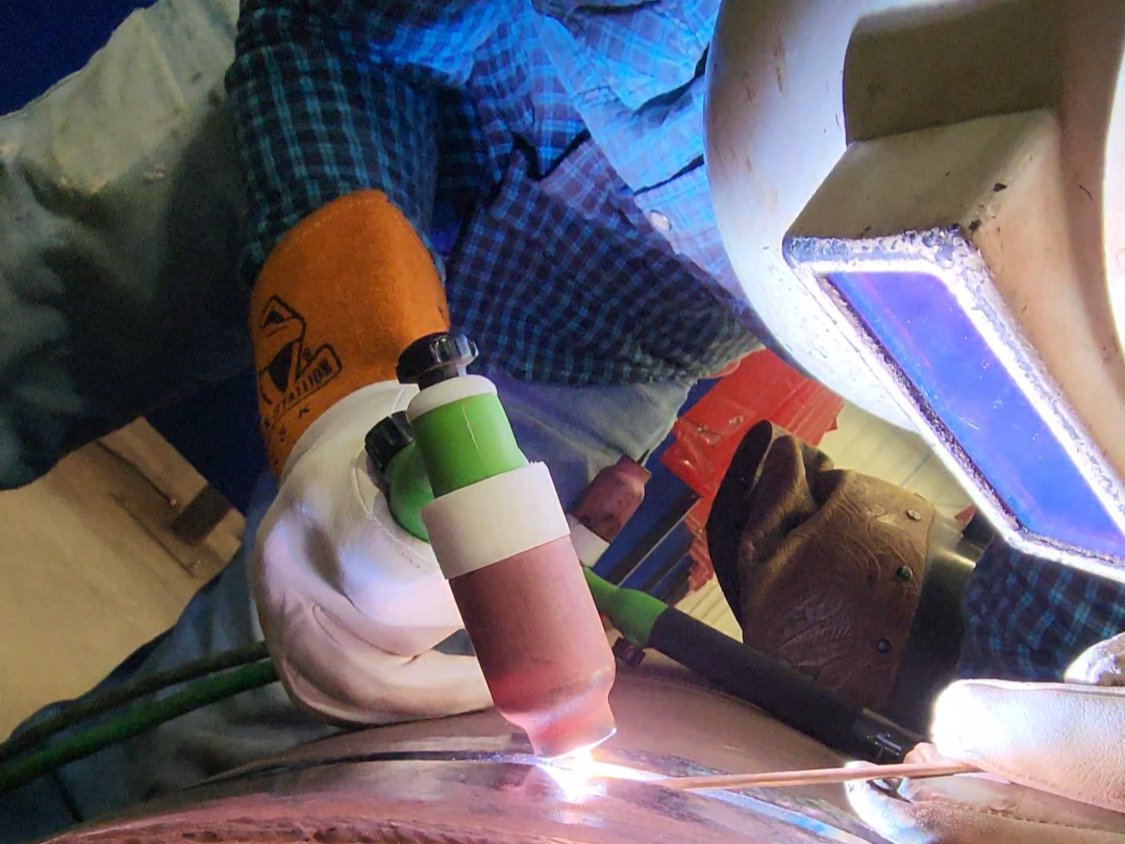
TIG and MIG are both used; helium or nitrogen-based shielding gases can help overcome copper's high thermal conductivity
Preheating is often required for pure copper sections to prevent cold fusion due to heat dissipation
Deoxidant-containing filler wire prevents porosity. Autogenous (no-filler) welding on cupro-nickel alloys is not recommended
What Solid Welding Training Builds First
Before you can weld titanium on an airframe or nickel alloys in a jet engine, you need a strong technical foundation. The welding techniques used in exotic alloy work are extensions of core skills, not replacements for them.
A quality welding training program teaches you to:
Control heat input and travel speed with consistency
Read and respond to a weld puddle in real time
Execute precise TIG technique, including torch angle, arc length, and gas coverage
Follow written welding procedures (WPS) accurately
Meet code standards through proper inspection, not guesswork
Strong base skills in welding processes such as SMAW, GMAW, and GTAW make specialization possible. Welders working with specialty metals in aerospace and military contexts didn't skip steps. They built their fundamentals first and earned the right to work in those environments.
Start With the Skills That Make You Hirable
If you're serious about building a career that could eventually reach aerospace or high-performance manufacturing, the path starts in a quality welding program. At American Welding Academy, the focus is on real-world skill development with high instructor-to-student contact. The curriculum goes beyond technique. It prepares students for the standards that employers in demanding industries actually enforce.
AWA offers a 24-week Pipe Welding & Fitting Course and a 12-week Fabrication Welding & Fitting Course, both designed to build the core competencies that allow you to grow into more advanced work.
If you're ready to develop the foundational welding techniques that serious industries require, visit www.awaweld.com or call American Welding Academy at (636) 800-9353 to learn more about which program fits your goals.
Frequently Asked Questions
Q: Can you learn to weld exotic alloys like titanium right in a standard welding program?
A: Not usually at the entry level. Exotic alloy welding typically requires you to first master foundational processes like TIG, MIG, and stick welding on more common materials. Base skills are what qualify you to move into specialized work later.
Q: Why is back-purging so important when welding titanium?
A: Titanium oxidizes rapidly when exposed to air at welding temperatures. Back-purging with inert gas, typically argon, protects the underside of the weld from contamination that would cause cracking or embrittlement.
Q: Are nickel alloy welding techniques similar to stainless steel?
A: There are similarities, but nickel alloys are generally more restrictive. They require tighter interpass temperature control, stricter bead-geometry practices (stringer beads rather than wide weaves), and more careful filler-metal selection to prevent solidification cracking.
Q: Do all copper alloys require preheat before welding?
A: Not all of them. Pure copper and low-alloy copper often require preheat to overcome heat-dissipation issues, but cupro-nickel alloys have thermal conductivity closer to that of carbon steel and typically don't require preheat.
