


Fabrication Jobs & Hiring Industries: 2026 Trends | American Welding Academy
If you've been thinking about a career in the trades, there's good reason to look closely at fabrication jobs right now. While multiple industries actively hire, the gap between available skilled workers and open positions continues to widen. Understanding where the demand is strongest can help you make a more informed decision about your next step.
The Workforce Gap Behind Fabrication Jobs
The numbers paint a clear picture. According to the American Welding Society (AWS), approximately 80,000 welding and fabrication jobs are open each year from 2025 through 2029. That demand is driven by a combination of real industry growth and an aging workforce. More than 157,000 welders are nearing retirement age, creating openings that need to be filled.
This is not a short-term spike. It is a sustained shift that is reshaping how industries recruit and retain trade talent.
Industries With the Strongest Fabrication Jobs Demand
The range of industries hiring fabricators is broader than most people expect. Here are some of the key sectors actively seeking skilled workers:
Construction and infrastructure: Bridges, water treatment plants, and large-scale commercial builds all require structural fabrication
Manufacturing: Advanced manufacturing facilities depend on fabricators for both production and equipment maintenance
Automotive: Custom and production fabrication are both active in this sector, from structural components to specialty parts
Aerospace: Precision metal fabrication is essential, and quality standards are high
Renewable energy: Wind towers, solar support structures, and energy infrastructure all require ongoing fabrication work
Shipbuilding: Hull construction and repair keep fabricators employed across coastal and inland facilities
Each of these industries values workers who understand material behavior, joint preparation, and how to consistently meet code standards.
What Types of Projects Are Driving Hiring?
Not all fabrication jobs look the same. Project type shapes what skills employers prioritize. Infrastructure spending has increased demand for large-scale structural work. Meanwhile, manufacturing expansion is creating steady openings for shop fabricators who work on production lines, fixtures, and custom components.
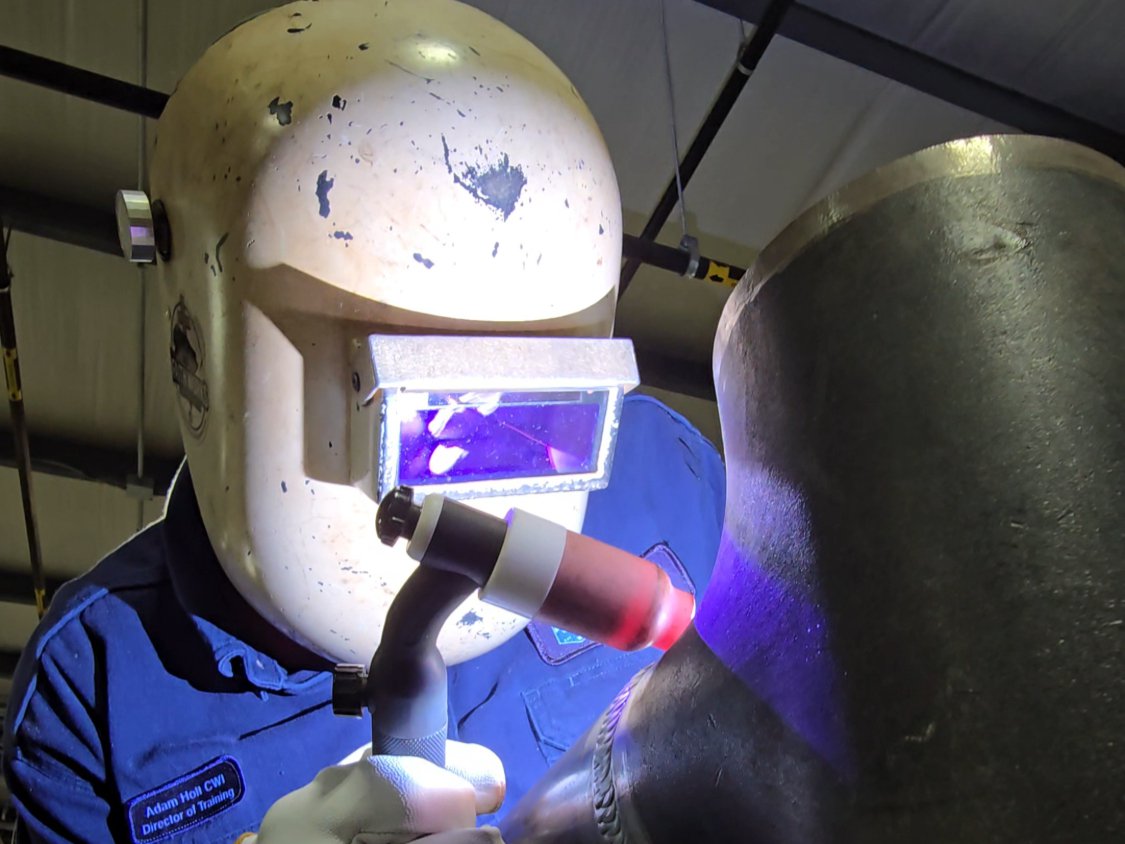
Custom fabrication is a growing segment within this landscape. Businesses often need one-off or small-batch metal components that standard suppliers cannot provide. This work rewards versatility and attention to detail. Fabricators who can read drawings, set up accurately, and deliver clean, code-compliant work are the ones who build lasting reputations.
What Gives a Fabricator a Competitive Edge?
Landing the job is only the first step. Standing out and advancing is another. Here are qualities that employers consistently look for beyond basic technical skills:
Code knowledge: Understanding what a quality weld or fit-up actually looks like according to industry standards
Communication: Being able to take direction, ask smart questions, and work as part of a team
Reliability: Showing up, following safety protocols, and being accountable
Adaptability: Willingness to work across materials, processes, and project types as needs change
Professionalism: Treating the job site, coworkers, and equipment with respect
These traits are not extras. Employers across construction, manufacturing, and energy sectors say they prioritize attitude alongside skill when making hiring decisions.
How American Welding Academy Prepares You
At American Welding Academy (AWA), the goal is to prepare students for real work, not just check a box. The 12-week Fabrication Welding & Fitting Course is designed to equip students with the foundational skills needed to pursue careers in advanced manufacturing and to construct projects at various scales. Working hands-on under experienced instructors, students must meet actual code standards to earn their pass rather than simply receive it.
AWA also goes beyond technical training. Financial literacy, workplace expectations, and professional conduct are all part of the experience. Employers who have hired AWA graduates consistently note that it is not just skills that set them apart. It is attitude and work ethic. That combination is what makes graduates competitive in a market where fabrication jobs are plentiful but truly qualified candidates are still relatively scarce.
If you are ready to build a skill set that holds real value across multiple industries, visit www.awaweld.comto explore program options and start dates, or call us directly at (636) 800-9353.
FAQ
Q: Do I need prior experience to enroll in a fabrication program?
A: No prior experience is required to enroll at American Welding Academy. Programs are structured to bring students from the fundamentals up to industry-standard skill levels.
Q: Are fabrication skills transferable across industries?
A: Yes. Core fabrication skills apply in construction, manufacturing, automotive, and energy sectors, among others. Your training gives you a foundation that is useful across a wide range of job environments.
Q: How long does it take to complete a fabrication training program at AWA?
A: The Fabrication Welding & Fitting Course is 12 weeks long, totaling 480 course hours. Both day and evening sessions are available to fit different schedules.
